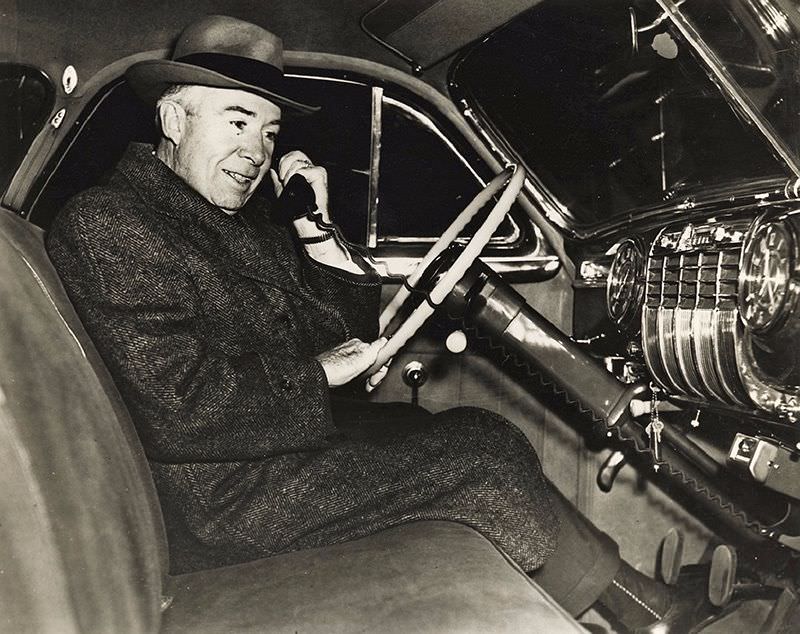
Tucked behind a wide steering wheel, a bundled-up driver lifts a handset to his ear with the easy confidence of someone trying tomorrow’s technology today. The coiled cord, the hefty receiver, and the tidy installation along the dashboard hint at how ambitious early car phone experiments were—more “radio set in a sedan” than the pocket devices we now take for granted. Details like the large knobs and period styling place the moment firmly in the mid-century imagination, when mobility meant freedom and instant communication still felt like magic.
Car phones didn’t arrive as sleek conveniences; they began as bold inventions that had to wrestle with cramped interiors, temperamental signals, and hardware that demanded space. In the 1940s through the 1980s, the idea evolved from operator-assisted calls and bulky equipment toward more standardized systems, gradually shrinking as networks improved and electronics matured. What looks simple in this photo—one person talking while seated at the wheel—represents decades of engineering, infrastructure, and cultural desire to stay connected on the move.
Across the decades covered in “Dialing Through Decades,” this kind of scene became a symbol of modern life, business urgency, and futuristic aspiration, even when the technology remained exclusive and expensive. The image invites readers to notice the physicality of early mobile communication: the wired handset, the fixed mounting, and the ritual of picking up to dial into a wider world. For anyone exploring the history of car phones, mobile technology, and automotive innovation, it’s a vivid reminder that the road to the smartphone began with inventions bolted into dashboards and dreams of calling from anywhere.