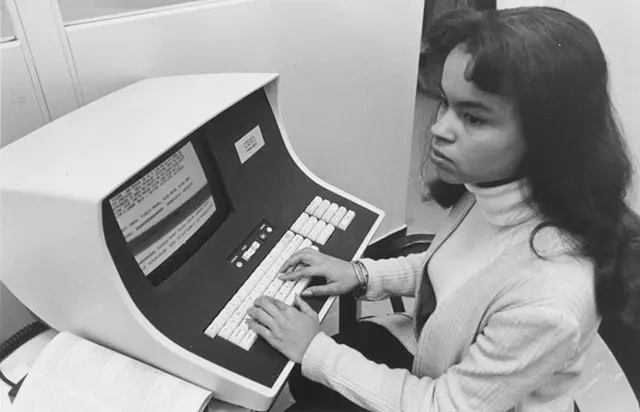
A young operator leans toward an NCR 796-201 cathode-ray terminal, fingers poised over a chunky keyboard as text glows on the small CRT screen. The machine’s sculpted casing and recessed display speak to an era when “computer” still felt like specialized equipment rather than an everyday object, and when interaction meant typing commands with care. In one frame, the physicality of early computing is unmistakable: large hardware, close attention, and a clear sense that every keystroke mattered.
Seen up close, the terminal’s layout reflects the practical design language of the early 1970s—controls grouped near the display, robust keys built for long sessions, and a work surface that accommodates paper alongside electronics. The on-screen lines of text hint at a world of data entry, system prompts, and business communication that relied on monochrome clarity rather than graphics. For anyone exploring the history of computer terminals, this NCR setup offers a tangible bridge between punch-card routines and the more interactive, screen-based workflows that followed.
Behind the technology lies the human side of innovation: the everyday labor of learning, operating, and trusting new tools in offices and institutions. Photos like this help ground big narratives about the digital revolution in lived moments—quiet concentration, standardized equipment, and the early spread of CRT terminals into professional environments. As a piece for WordPress readers interested in inventions and the evolution of computing, it’s an evocative reminder of how quickly interfaces changed, and how much the “future” once looked like a dedicated workstation with a glowing screen.