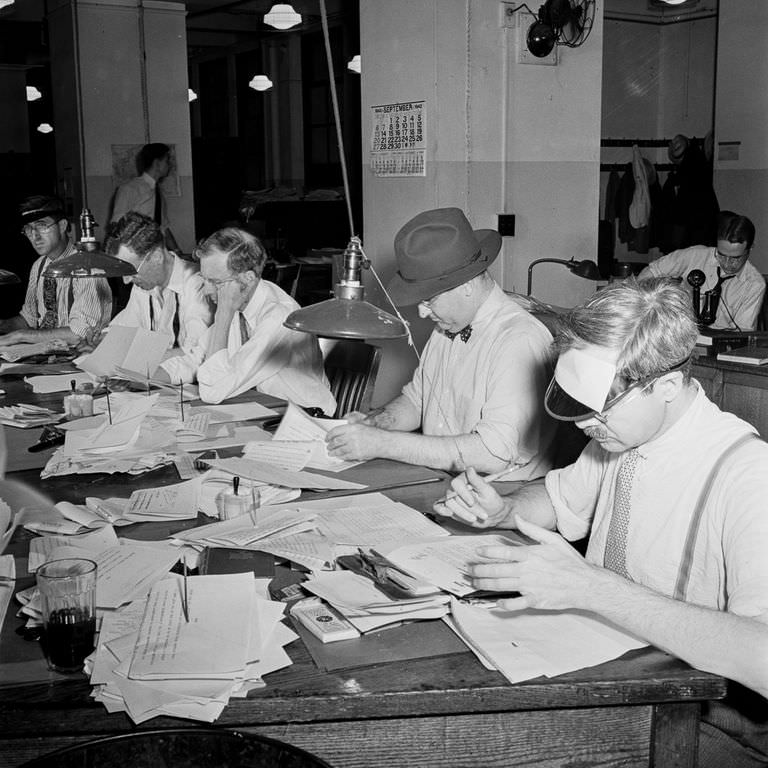
Under harsh desk lamps, a row of correspondents leans into the disciplined chaos of a bustling newsroom, sleeves rolled, ties loosened, and paperwork spread in uneven stacks across a long wooden table. The title, “Argentine, Swiss, and Mexican correspondents,” hints at an international mix of voices working side by side, translating distant events into readable lines for a waiting audience. Faces tilt down toward notes and proofs, suggesting deadlines, cables, and the steady pressure to get every detail right.
What stands out is the tactile world of reporting before digital convenience: handwritten edits, typed pages, and the constant shuffle of documents passing from hand to hand. The lamps carve bright islands of light amid a darker office, emphasizing concentration and fatigue in equal measure, while background figures move through the room like supporting actors in a daily drama. It’s a compelling snapshot of how news traveled—slowly, physically, and through the judgment of people trained to weigh words.
Framed around “Inventions,” the scene also reads as a quiet tribute to the tools that reshaped journalism and international communication, from office machines to the networks that carried dispatches across borders. These correspondents embody the early infrastructure of global reporting, where multilingual perspective was as valuable as speed. For readers searching for historical newsroom photos, foreign correspondents, or the history of the press, this image offers a grounded, human view of how the world’s stories were once assembled.