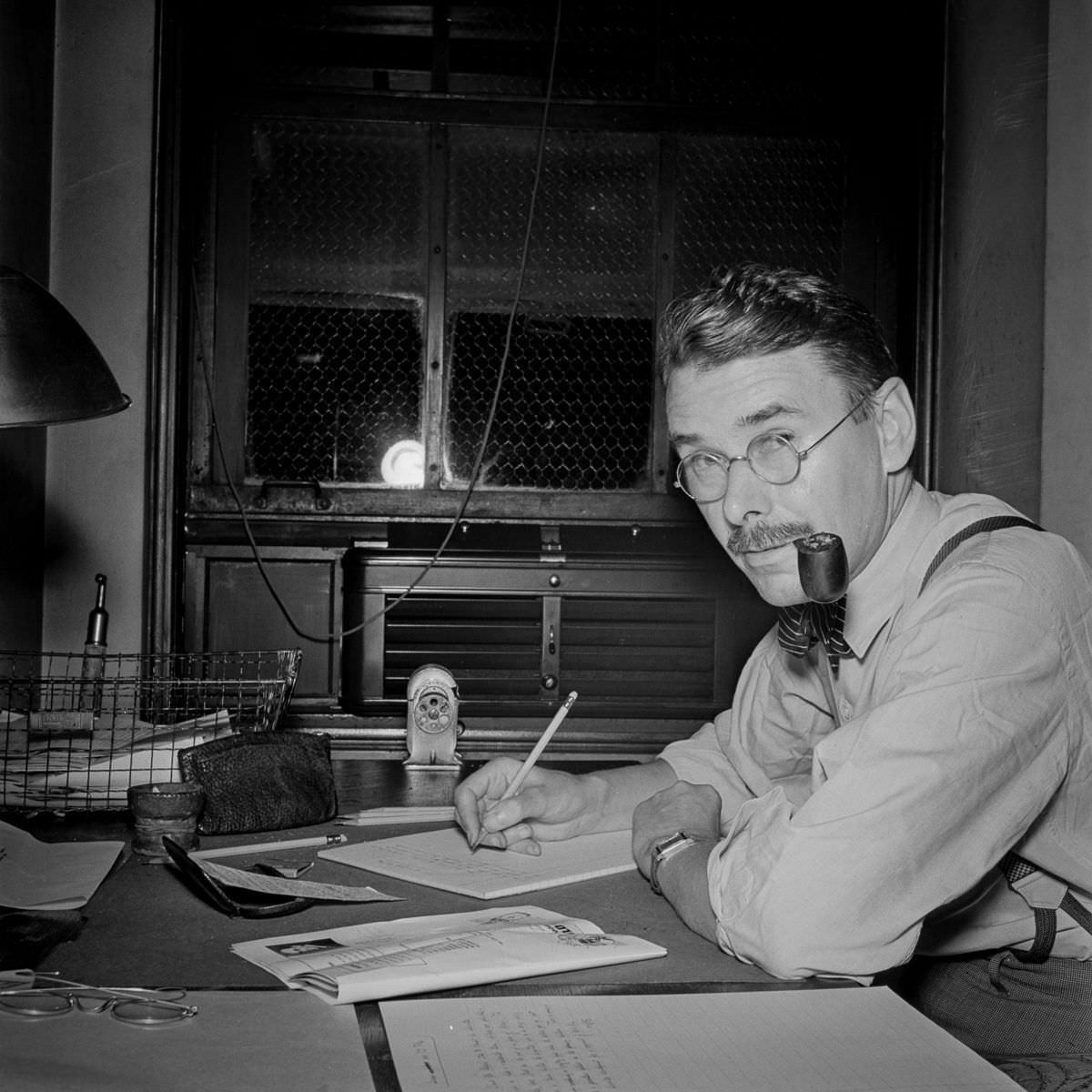
Under the focused pool of a desk lamp, drama critic Brooks Atkinson leans over a sheet of paper, pencil poised as if the last curtain has only just fallen. Round spectacles catch the light, a pipe rests at the corner of his mouth, and a bow tie and suspenders hint at a working uniform as recognizable in newsrooms as it was in theater aisles. The scene feels quiet but urgent, the moment when impressions harden into sentences and a new play’s fate begins to take shape in print.
Across the desk, the everyday tools of the trade scatter into view—papers, a wire tray, and a small desktop device—while the background reads like a working office rather than a glamorous stage door. The composition draws you into the critic’s vantage point: not the spotlight, but the afterglow, where notes are checked, phrasing is tested, and a verdict is weighed. Even without a visible marquee or playbill details, the photograph conveys the backstage reality of theater journalism and the discipline behind a timely review.
For readers searching Broadway history, newspaper criticism, or the craft of writing about performance, this image offers a vivid snapshot of mid-century cultural gatekeeping at work. Atkinson’s direct glance toward the camera suggests a brief interruption—perhaps a photographer stepping in before the next sentence is finished—yet his hand remains anchored to the page. It’s a reminder that the story of the stage is also written at desks like this one, where opinion, observation, and the pressure of deadlines converge into a review that audiences will read the next morning.