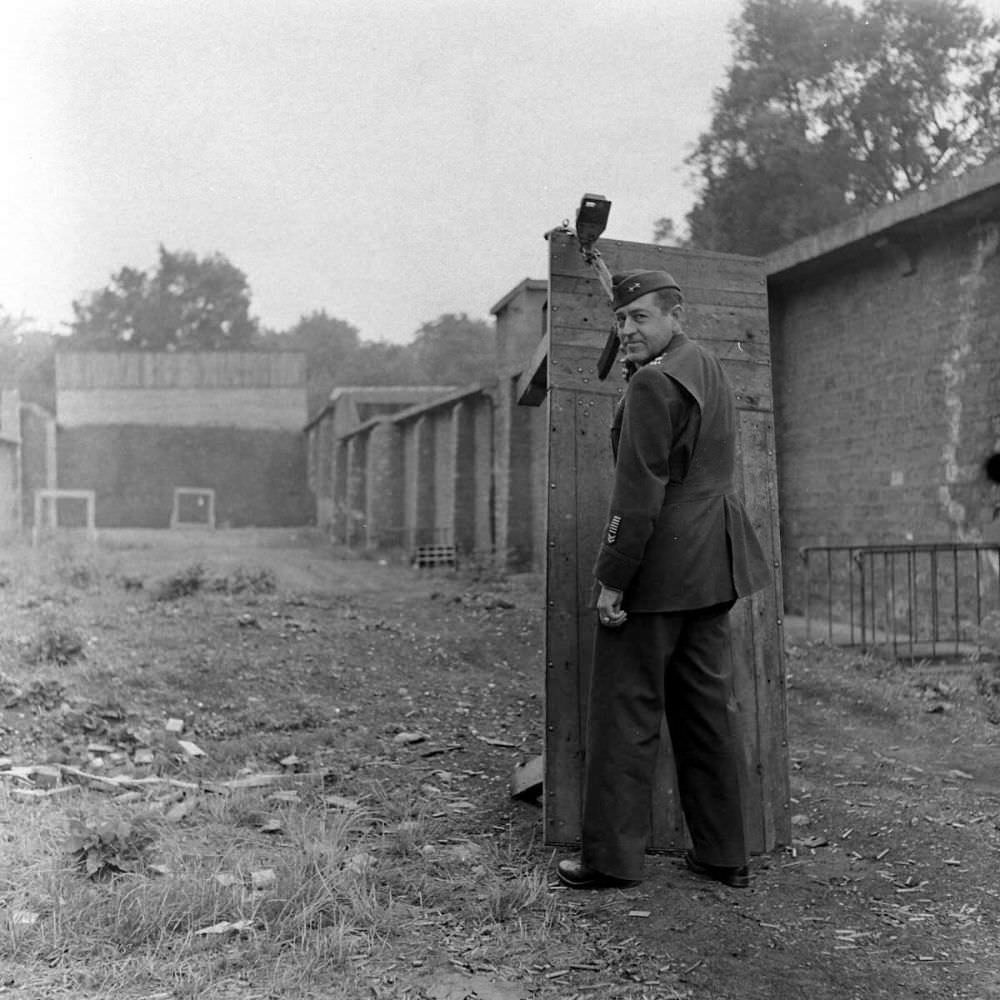
A lone serviceman pauses beside a tall wooden barricade on a rough training ground, turning his head toward the camera as if to acknowledge the strange contraption mounted above him. The setting feels improvised—brick buildings, scattered debris, and a muted sky framing a moment that looks part experiment, part demonstration. It’s the kind of scene where wartime necessity meets workshop ingenuity, captured before the results were fully known.
At the center of the story is the Krummlauf, the famously unusual WWII-era attempt to make gunfire “turn corners” with a curved barrel attachment. In photographs like this, the apparatus appears almost too clever to be real, yet it reflects a genuine problem soldiers faced in close fighting: how to fire from cover without exposing the shooter. The post explores how this invention was tested, why it drew attention, and what its limitations revealed about the unforgiving physics of bullets and pressure.
Curious readers of WWII inventions will find this image a perfect doorway into the broader world of experimental small-arms engineering, where bold ideas often collided with brutal practicality. Details like the protective screen and the careful stance suggest caution—an unspoken hint that bending bullets comes at a cost to accuracy, durability, and safety. If you’re searching for the true tale behind the Krummlauf and the surprising lengths engineers went to reshape battlefield tactics, this feature brings the history into focus.