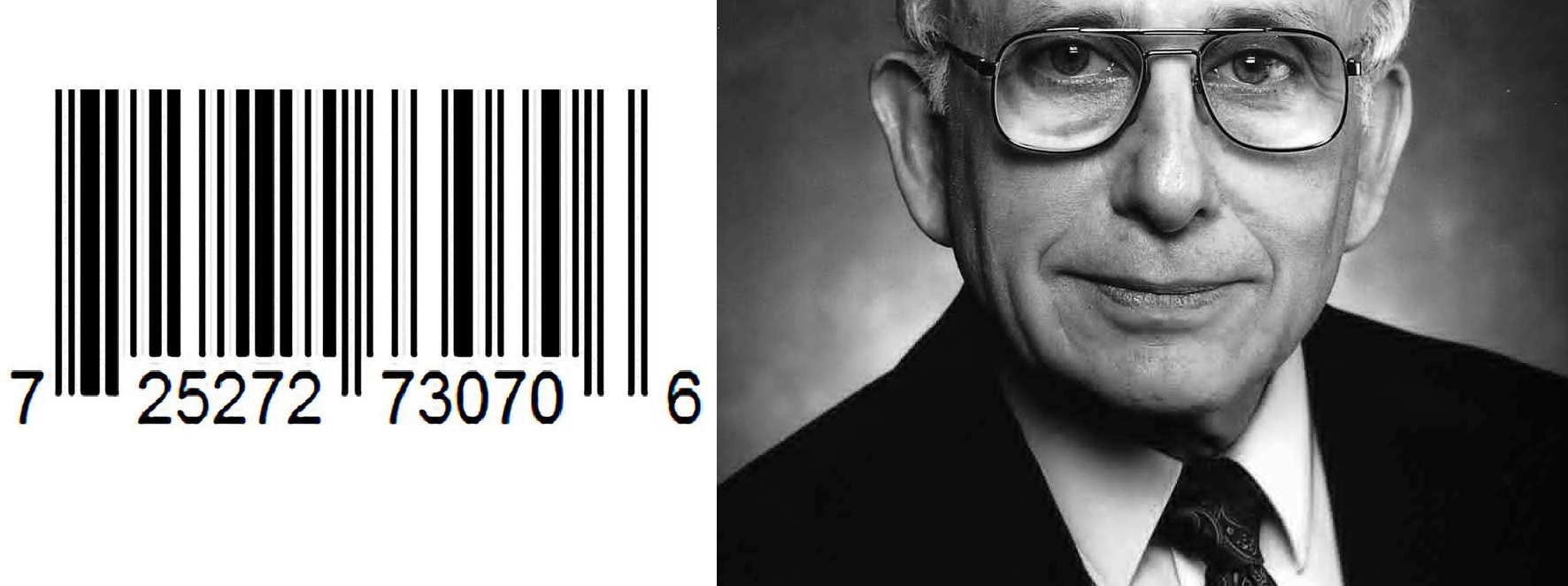
A field of crisp vertical bars and small numerals sits beside a tightly framed portrait of a bespectacled man in a suit, pairing symbol and inventor in one striking composition. The stark contrast between the minimalist barcode pattern and the soft, studio-lit face makes the concept feel both technical and personal, as if the language of commerce has been given a human origin story. Even without extra context, the visual shorthand is instantly recognizable: the code that would come to live on nearly every product label.
Set in 1948 and attributed to Joseph Woodland, the piece points to a moment when postwar ingenuity was turning everyday errands into problems worth solving. The barcode’s repeating lines suggest order, standardization, and machine readability—ideas that would later reshape retail, warehousing, and supply chains. Seen today, those simple strokes read like the blueprint of modern checkout counters, inventory systems, and data-driven logistics.
For readers interested in inventions and the history of technology, “Barcode (1948) by Joseph Woodland” works as a compact reminder that transformative systems often begin as abstract marks on paper. The portrait invites a pause to consider the minds behind routine conveniences, while the graphic code hints at the vast infrastructure hidden behind a single scan. In a world of quick beeps and instant receipts, this historical image brings the barcode’s origins back into focus.