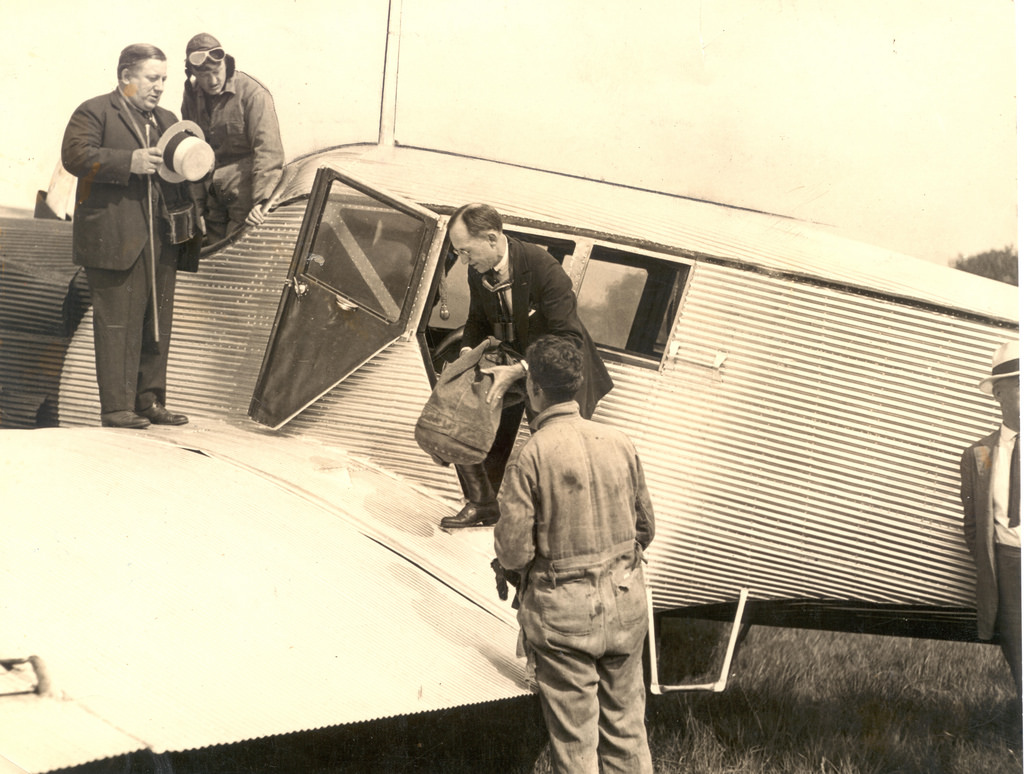
July 29, 1920 feels close at hand in this candid moment on the wing of a corrugated-metal aircraft, where suited officials and a leather-jacketed airman cluster around an open cabin door. One man steadies himself at the threshold while another looks on with hat in hand, the scene balanced between ceremony and routine. The airplane’s ribbed skin and simple window frames hint at the practical engineering of early aviation, built for reliability as much as for speed.
A heavy mail sack changes hands mid-action, its weight and urgency unmistakable as it’s guided into the plane for a transcontinental flight. On the grass below, a worker in overalls stands ready, grounding the image in the everyday labor that made airmail possible. Even without a bustling terminal in view, the photograph conveys an early logistics network in motion—people, paperwork, and cargo converging at the aircraft’s door.
Early airmail loading was more than a photo-op; it was a promise that messages could outrun trains and highways, stitching distant cities together by air. The clothing mix—business suits beside flight gear—captures a transitional era when aviation was shifting from daring experiment to dependable service. For readers interested in inventions, aviation history, and the rise of air transport, this snapshot of 1920 airmail work offers a vivid reminder that modern express delivery began with hands-on loading and short-field departures like this one.