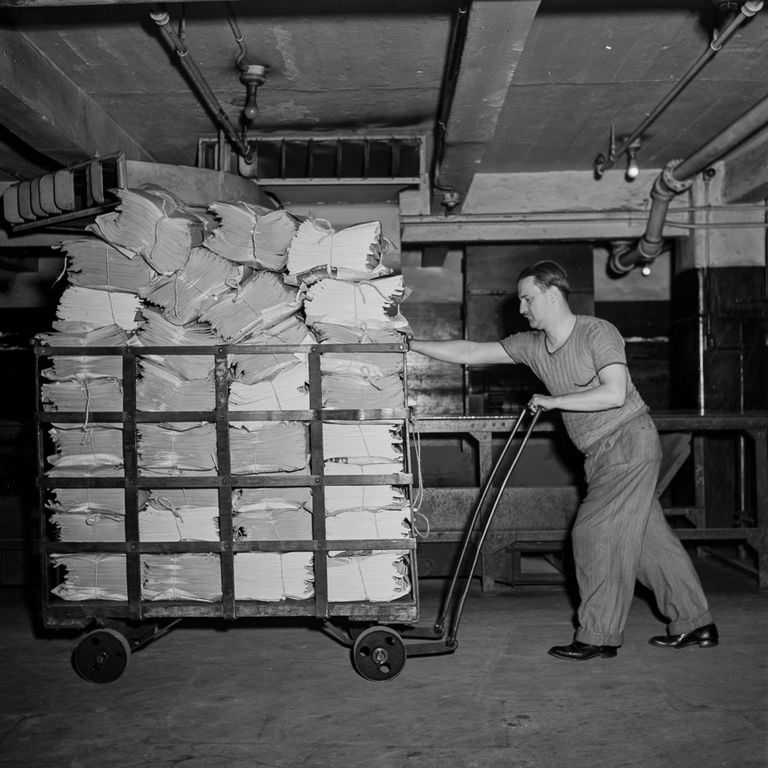
In an industrial back room lined with pipes and heavy beams, a worker steadies a wheeled cart stacked high with bundled newspapers, each bundle tied and squared off for transport. The weight of the load is almost tangible: dense layers of folded pages piled into a gridded rack, ready to move from production to the street. It’s the unglamorous, essential moment after the presses—when printed words become a physical shipment.
The scene speaks to the quiet ingenuity of distribution, where simple tools and practiced motion keep a publishing operation flowing. A sturdy hand truck and a compartmented trolley turn sheer volume into manageable units, reflecting the “Inventions” behind everyday logistics rather than a single dramatic machine. Even without a visible press, the photo evokes the rhythm of a print shop: sorting, bundling, staging, and dispatch.
Bundles of finished papers prepared for delivery remind us that news has always relied on muscle, organization, and timing as much as ink and type. Before readers ever unfolded a page, someone had to tie the stacks, count the output, and push the load down concrete floors toward waiting routes. For anyone interested in newspaper history, printing industry workflows, or the material culture of information, this image captures the practical bridge between making and reaching an audience.