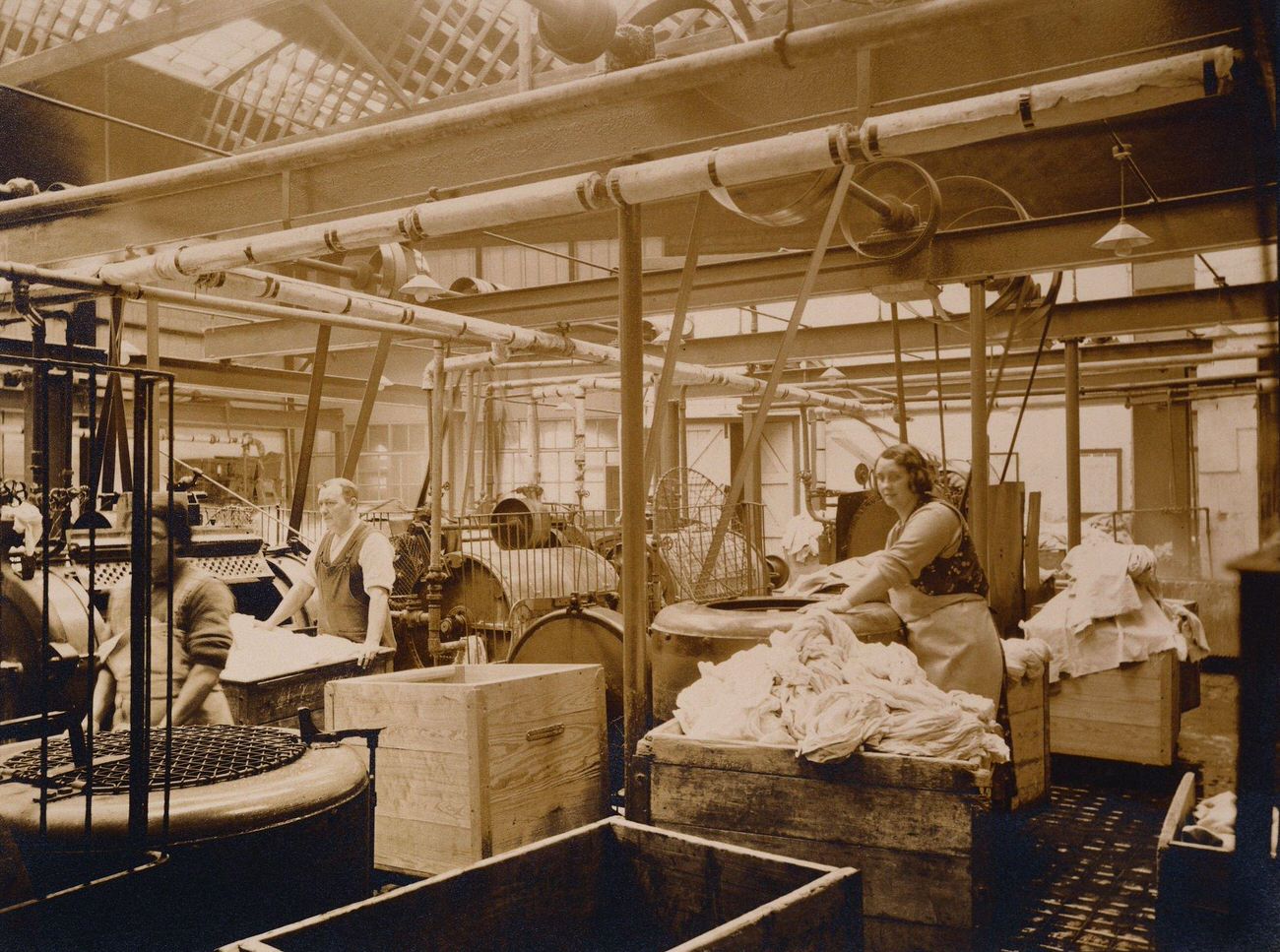
Steam, pipes, and overhead shafting frame a busy laundry floor in Bath, England, where men and women work side by side among vats, rollers, and heaps of linen. The scene has the feel of an industrial workshop as much as a domestic chore, with sturdy wooden bins and wire guards separating workers from heavy machinery. Clothing and sheets appear in constant motion—sorted, lifted, fed into presses—turning everyday fabric into a steady rhythm of labour.
On the right, a woman stands at a work surface piled high with washed items, her posture suggesting the repetitive demands of folding and preparing garments for pressing. Nearby, a man steadies a load at another station, while another worker bends into the task at hand, partially obscured by equipment. Details like the open roof structure and hanging lights hint at a purpose-built facility designed to keep production moving from wash to finish.
Bath’s reputation as a place of cleanliness and comfort makes this working view especially striking: behind the city’s genteel image was the often-invisible industry that kept households, hotels, and institutions supplied with fresh laundry. The photograph also speaks to “inventions” in the practical sense—mechanised washing and pressing systems that transformed traditional handwork into factory routines. For anyone researching social history in Bath, England, or the evolution of laundry technology, it offers an evocative look at the people and machines that made cleanliness a daily reality.