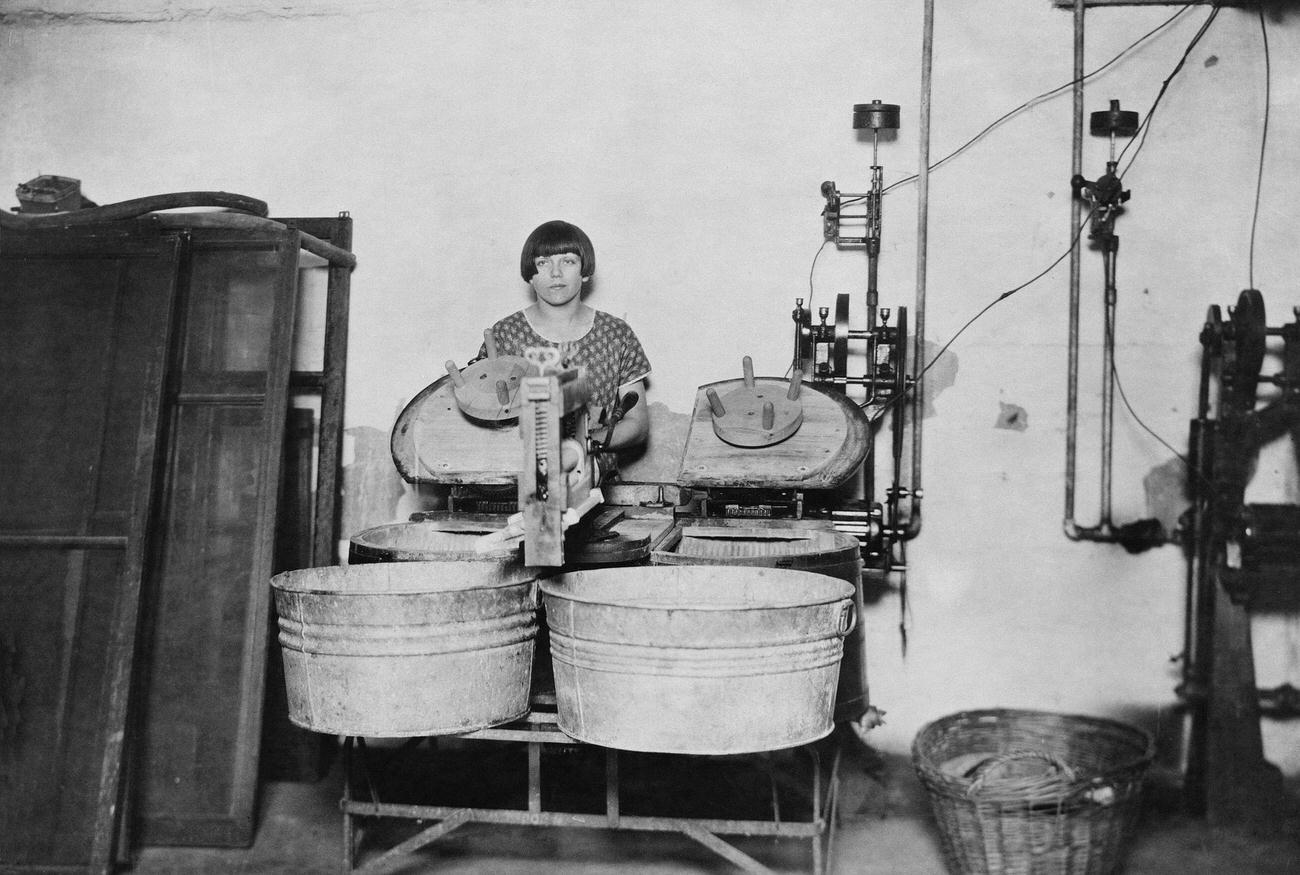
Bessie Flamoe stands at the center of an early electric washing machine setup, framed by two large metal tubs and a sturdy, industrial-looking frame. The lids and mechanisms suggest a powered system meant to agitate and process laundry more efficiently than hand scrubbing, while the utilitarian room around her—plain walls, exposed pipes, and a basket ready for linens—keeps the focus on work and equipment rather than comfort.
What makes the scene compelling is the mix of domestic labor and engineered innovation. Wires and mechanical components run up the wall and across the apparatus, hinting at the new dependence on electricity and machinery entering everyday routines. Even without a visible brand or sign, the machine’s scale and complexity speak to a period when “modern” cleaning promised to save time, reduce strain, and reshape how households and laundries approached the weekly wash.
For readers interested in inventions and the history of household technology, this photo offers a grounded look at the transition from washboard labor to powered appliances. It’s a reminder that the electric washing machine was not just a convenience item but part of a broader shift toward mechanized domestic life—where progress arrived through metal, motors, and the hands of people like Bessie Flamoe learning to use them.