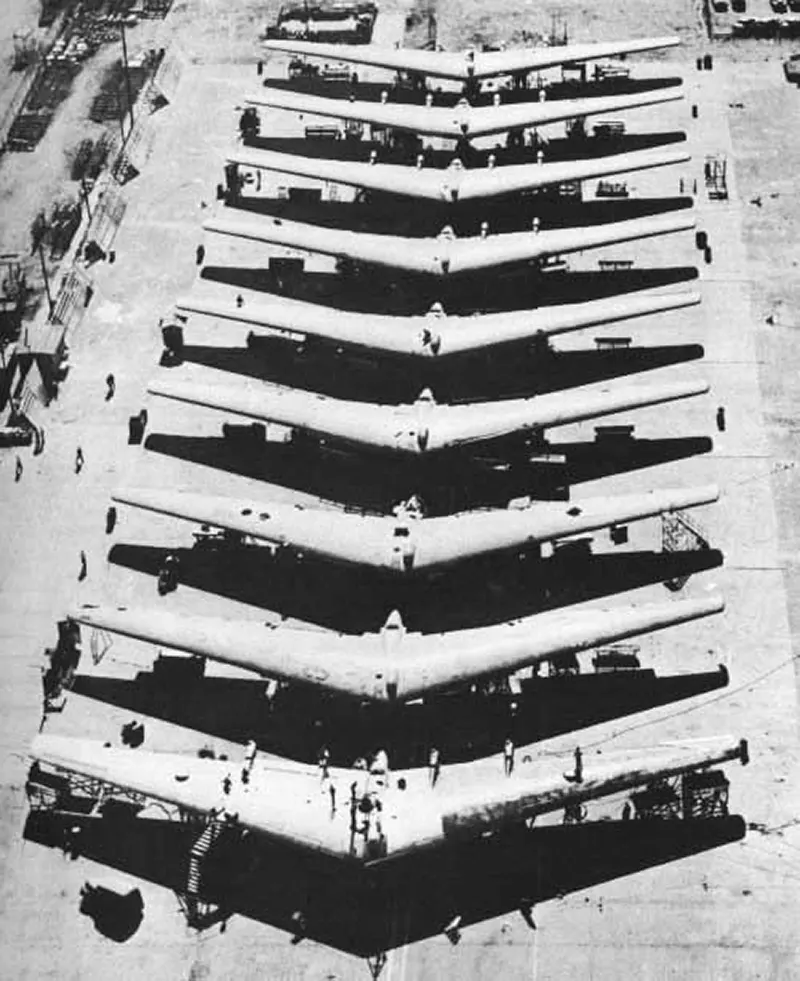
Lined up nose-to-tail on a sunlit ramp, nine Northrop flying wing bombers form an almost unreal pattern of stacked triangles, their broad, tailless planforms dominating the frame. The perspective emphasizes repetition and scale: wing after wing, each airframe separated by just enough space for crews and equipment to move between them. Even in grainy detail, the scene feels industrial and experimental at once, like a production line that never quite became a common sight.
What makes the photograph so compelling is how directly it challenges the popular shorthand that the Flying Wing was merely a one-off curiosity. The title’s claim—multiple prototypes built, with at least two undergoing the shift from XB-35 configuration toward the jet-powered B-49—fits the visual evidence of a busy test and modification environment. Ground activity around the aircraft hints at ongoing work rather than static display, reinforcing the idea that these machines were part of a sustained program of invention, iteration, and ambition.
For aviation history readers and researchers, images like this serve as rare documentation of the Northrop Flying Wing bomber effort at a scale that text alone can struggle to convey. The photo invites closer looking: subtle differences in shadows, hatches, and surface features suggest aircraft at different stages of completion or conversion, exactly the kind of detail that sparks debate in archives and forums. Whether you arrive here for the XB-35, the B-49, or the broader story of experimental bomber design, this is a striking reminder of how close radical ideas can come to routine reality.