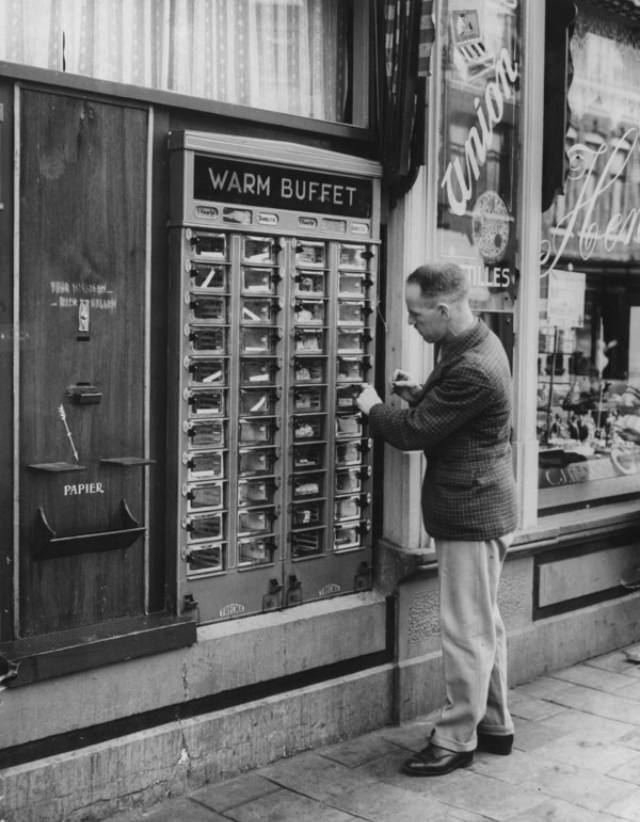
Along a Zandvoort shopfront, a man pauses at a “WARM BUFFET” vending machine whose neat rows of small glass doors promise a quick hot bite without a waiter or a queue. The street feels orderly and modern, with the machine embedded right into the façade like a practical extension of the building itself. Even in stillness, the scene suggests motion—holidaymakers, commuters, and day-trippers passing by, stopping only long enough to eat.
What stands out is the choreography of everyday technology: coins in hand, a glance at the compartments, then the simple act of choosing a meal behind a window. The many identical slots hint at variety and abundance, while the bold lettering turns warmth into a selling point, not just a comfort. It’s a small reminder of how “inventions” often arrive quietly, reshaping routines one transaction at a time.
For anyone searching for Dutch history in the details, this warm lunch vending machine at Zandvoort in the Netherlands offers a snapshot of mid-century convenience culture—part automation, part street life. The photograph invites questions about what counted as fast food, how shops displayed reliability, and why self-service appealed in a seaside town. As a piece of social history, it’s less about a single customer than about a society learning to trust machines with something as ordinary, and as important, as lunch.