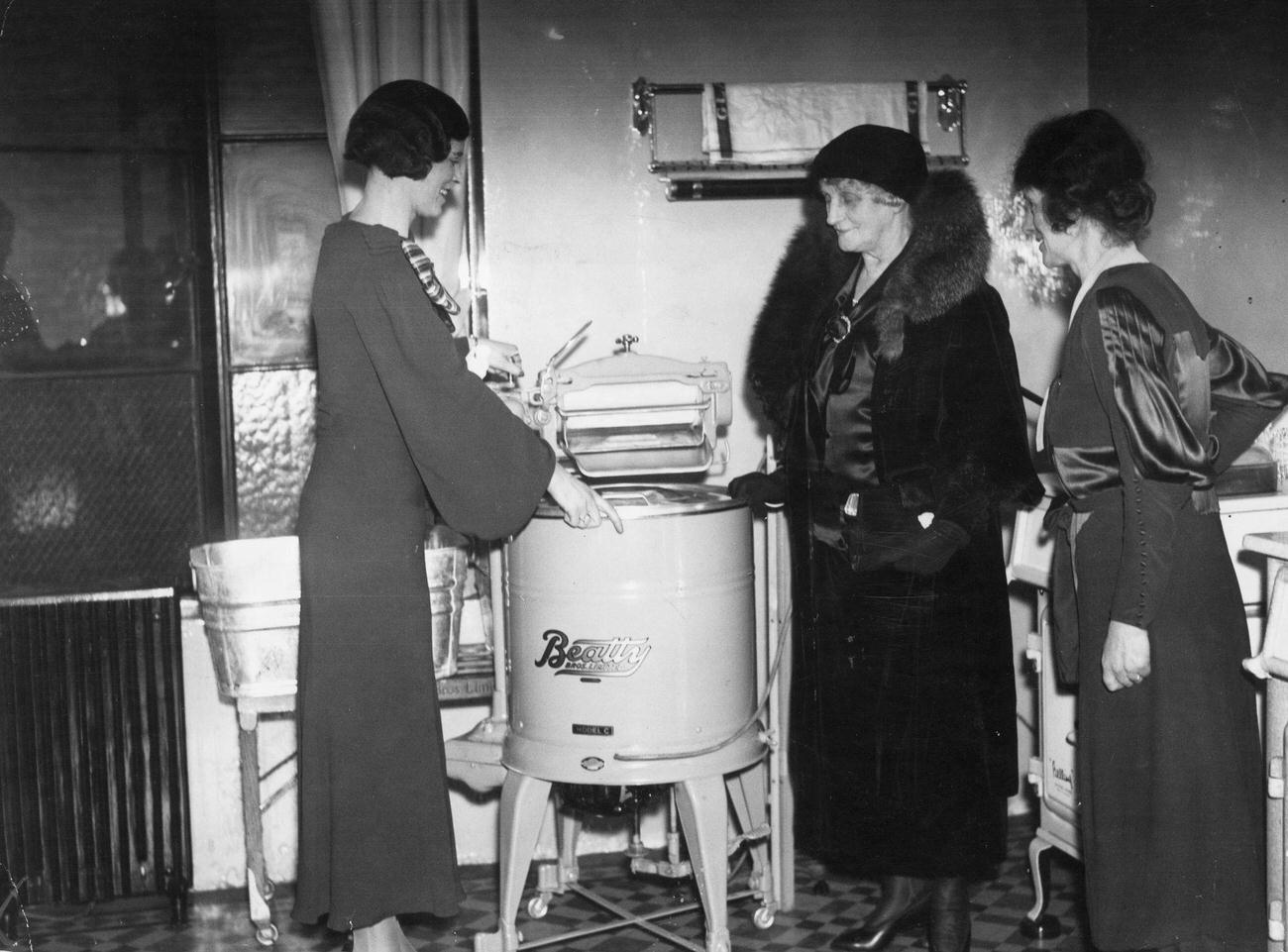
Poised beside a newfangled appliance, Lady Moir leans in with the measured curiosity of someone weighing promise against practicality. A demonstrator points to the open tub of an electrical washing machine while another woman watches, turning the inspection into a small domestic theatre of modernity. The scene feels half showroom, half household, with polished metal, neat cabinetry, and the machine’s bold branding inviting trust in technology.
In 1934, electric laundry equipment was still a statement—about comfort, efficiency, and the growing reach of power into everyday routines. The washer’s upright, drum-like body and attached wringer hint at an era when mechanized washing was advertised as both labor-saving and hygienic, even as many homes continued to rely on older methods. Clothing and posture matter here too: smart dresses and a fur-trimmed coat suggest that household inventions were being marketed not merely as tools, but as aspirational upgrades to modern living.
Details in the background—tiled flooring, glass-paneled doors, and an orderly line of fixtures—frame this moment as part of a broader story of interwar consumer innovation. For readers interested in the history of home appliances, women and technology, or the evolution of the electric washing machine, the photograph offers a vivid snapshot of changing domestic expectations. It reminds us that “inventions” were adopted one demonstration at a time, as people literally gathered around a machine to decide whether the future belonged in the laundry room.