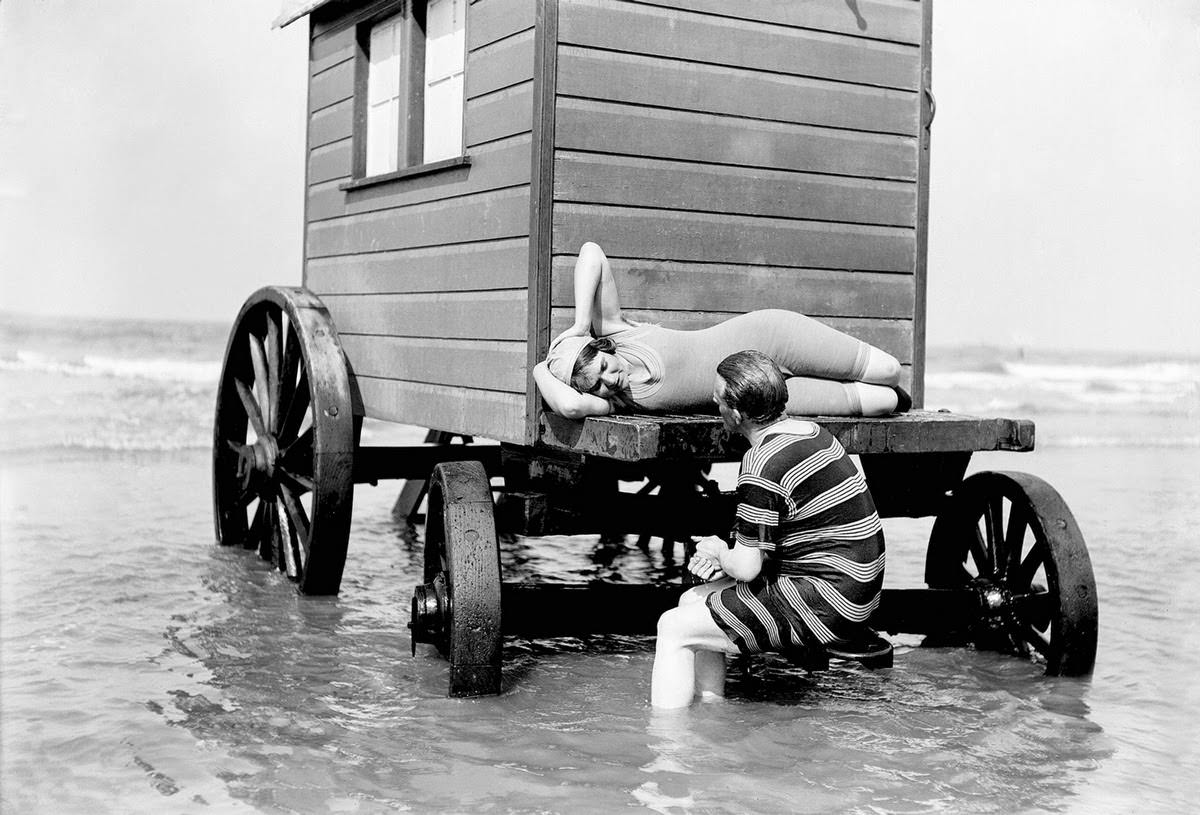
Wheels sink slightly into wet sand as a wooden bathing machine stands half in the surf, part hut and part cart. Two beachgoers lounge and chat at its rear platform, dressed in modest, close-fitting swimwear that still reads as carefully “proper.” The scene feels both practical and playful: a private changing room on stilts, pushed right to the water’s edge so seaside leisure could happen without the sting of exposure.
Beneath the novelty lies a very Victorian logic—engineering built around etiquette. Bathing machines were designed to let people change out of sight, then step down into the sea with dignity intact, especially at crowded resorts where watchers and promenaders were part of the culture. Looking at the heavy wheels and boxy construction, you can almost hear the creak of timber and imagine the effort required to drag this little cabin across the beach.
Going Swimming On Wheels gathers 50+ historic photos that trace how these inventions bridged old anxieties and new pleasures, from strict modesty to the gradual easing of social rules. For anyone searching the history of beach culture, Victorian bathing machines, or early swimwear, the images reveal a coastline in transition—where privacy was mobile and the ocean was approached through a doorway on wheels. Each photograph is a small reminder that even a simple dip in the sea once required a surprising amount of infrastructure.