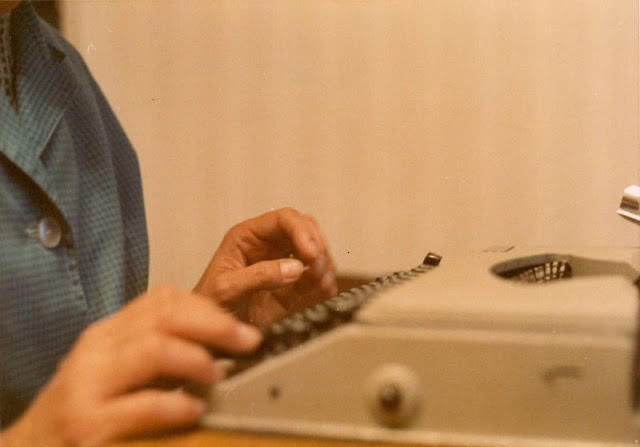
Close-up hands hover over the rounded keys of a manual typewriter, with a patterned blouse at the edge of the frame hinting at a busy office or home workspace. The tight crop draws attention to touch and technique—fingers poised for the staccato rhythm that once powered letters, invoices, and reports. Even without a visible face, the scene evokes the everyday professionalism of women who mastered this pivotal invention.
Typewriters didn’t just speed up writing; they reshaped clerical work and opened new avenues of paid employment, especially for ladies entering modern workplaces. The metal body, the exposed key bank, and the paper guide at the right edge speak to a time when communication was mechanical, audible, and precise. Small details—like the careful spacing of the hands and the slight blur of motion—suggest the practiced fluency required to keep pace with dictation and deadlines.
For readers drawn to historical photos of women using typewriters, moments like this offer more than nostalgia: they reveal how technology and labor intertwined in daily life. These past inventions were tools of independence as well as productivity, turning handwriting into standardized text and private thoughts into formal documents. Explore the collection with an eye for the human element, because the story of the typewriter is also the story of the people who made it sing.