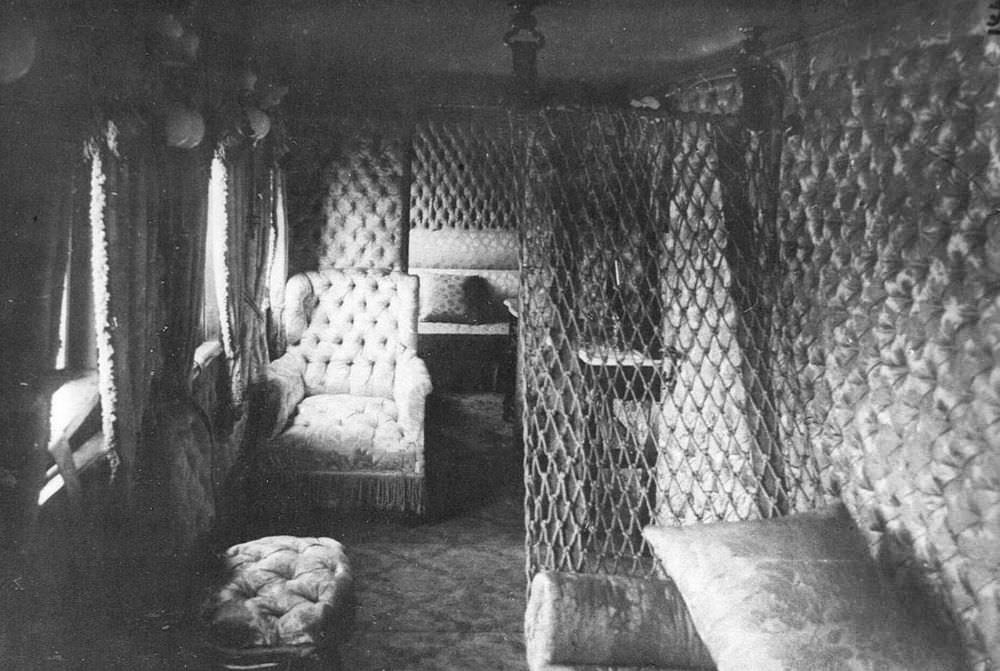
Upholstery dominates the room, turning walls and furniture into a continuous, padded landscape that feels both luxurious and oddly protective. Deep button tufting catches the light in repeating diamonds, while heavy curtains soften the windows and deepen the sense of enclosure. Even the seating appears built for lingering, with a broad, cushioned armchair and low footstool inviting a slower rhythm of life.
English cretonne with plant ornaments, as the title notes, hints at a fashionable taste for nature brought indoors—leafy motifs and garden patterns translated into domestic comfort. In an era fascinated by “inventions,” such textiles were more than decoration: they reflected advances in manufacturing, dyeing, and printing that made richly patterned interiors attainable and consistent. The resulting effect is a kind of engineered coziness, where softness and surface design become the main architectural features.
Details like the netted partition and layered fabrics suggest a space carefully organized for privacy, warmth, and display, perhaps in a compartmentalized interior where functions were separated without building solid walls. For readers searching vintage interior design inspiration, this historical photo offers a vivid example of how textiles once shaped everyday environments—how upholstery, cretonne patterns, and furnishing choices could redefine an entire room’s mood. It’s a reminder that domestic history is often written in fabric, stitch by stitch, across the places people lived and rested.