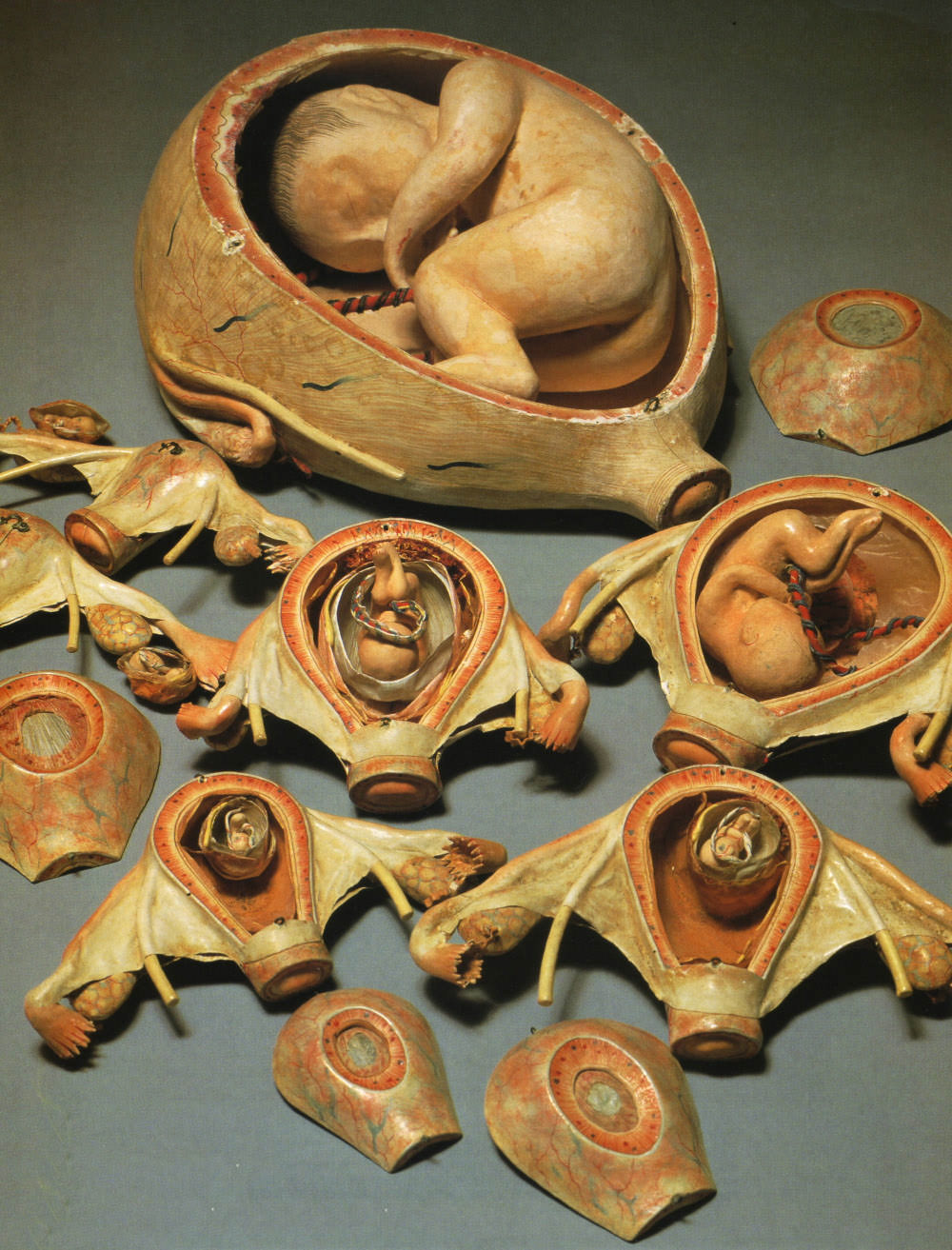
Arranged like specimens on a tabletop, these “pregnancy dolls” open to reveal curled infants inside womb-like chambers, their surfaces painted with branching veins and fleshy tones. Removable lids and cutaway sections turn each figure into a miniature theater of reproduction, complete with umbilical cords and layered membranes rendered in striking detail. The result is both intimate and unsettling—an object that invites close inspection while reminding modern viewers how differently earlier audiences encountered the hidden processes of the body.
In the 19th-century Japanese context suggested by the title, such ingenious models could blur boundaries between education, entertainment, and spectacle, fitting neatly into the world of Edo-period sideshow attractions and popular curiosities. Their construction hints at skilled craftsmanship and a fascination with anatomy that wasn’t confined to elite study alone, but could circulate as public wonder. As inventions, they speak to a culture eager for visual explanation—where learning often arrived through hands-on mechanisms rather than printed diagrams.
What lingers is the tension between realism and performance: these dolls are not portraits of individuals but carefully staged interiors meant to be opened, displayed, and discussed. For readers interested in Japanese history, medical material culture, or the eccentric edge of museum collections, the photograph offers a vivid entry point into how reproduction was imagined, taught, and marketed. It’s a rare peek at the objects that once transformed private biology into public curiosity.