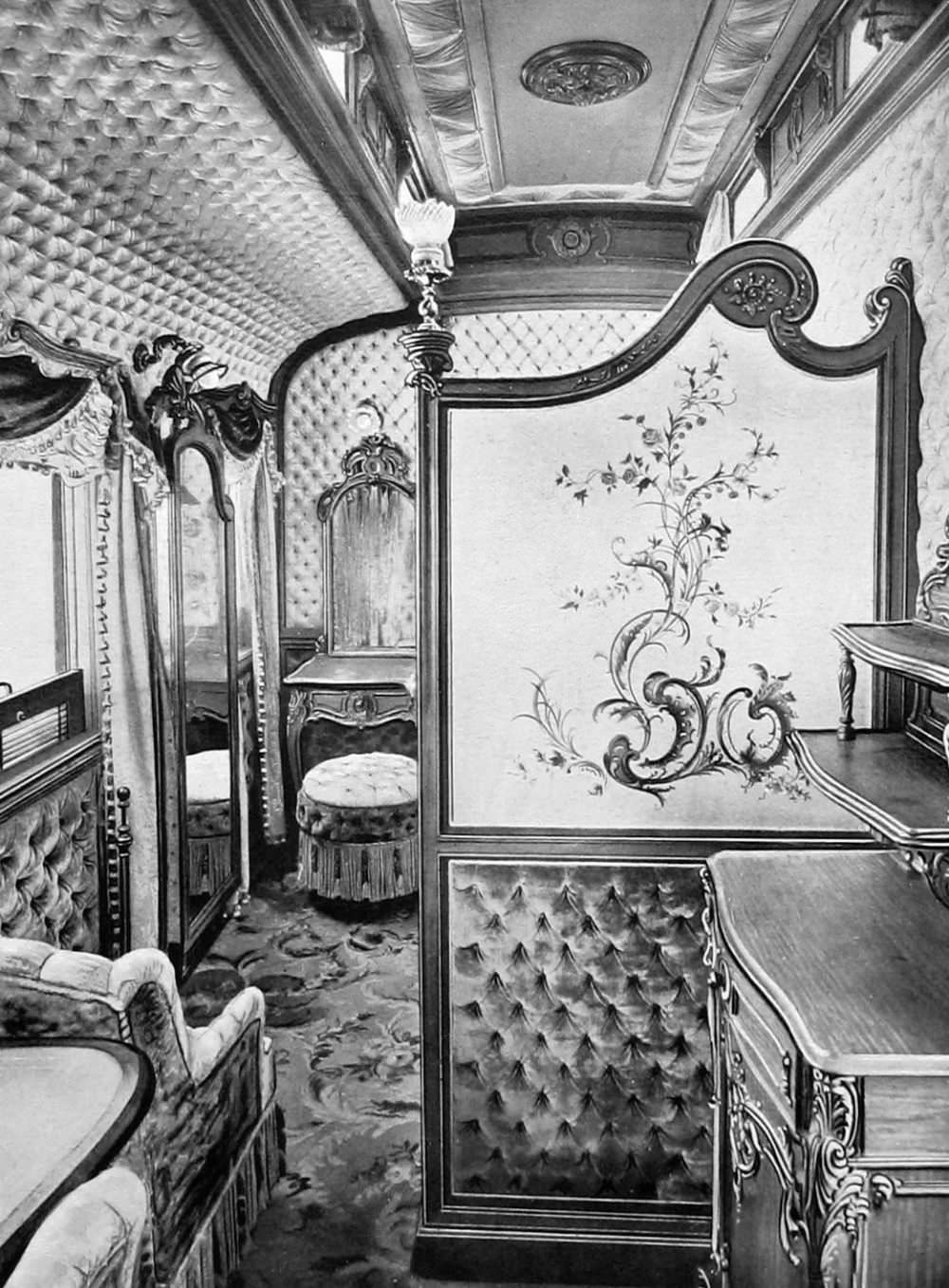
Step into the hushed corridor of an Imperial train interior, where upholstered walls and carved woodwork turn a moving carriage into something closer to a private salon. The camera lingers on tufted panels, a richly patterned carpet, and a partition painted with delicate floral scrolls—ornament that hints at the dark blue coaches and gilded decoration celebrated in the title, even when reproduced in monochrome. Mirrors, polished moldings, and carefully framed surfaces amplify the sense of depth, making the space feel both intimate and ceremonially grand.
Luxury here is not simply piled on; it’s engineered. A compact washstand and storage cabinetry fit neatly along the passage, while a soft, cushioned seat suggests comfort during long-distance rail travel. The lamp and ceiling detailing speak to the era’s fascination with modern conveyance made safe and elegant, a blend of craft tradition and technical “inventions” that allowed royalty-level refinement to roll smoothly across tracks.
What makes this historical photo so compelling is the way it reveals status through materials and layout rather than through people. Every curve of gilded-style trim, every buttoned textile surface, and every carefully placed mirror signals a world where travel itself was a performance of power and taste. For readers interested in imperial trains, luxury railway carriages, and the history of interior design, this detail offers a rare, close look at how prestige was built into the very architecture of motion.