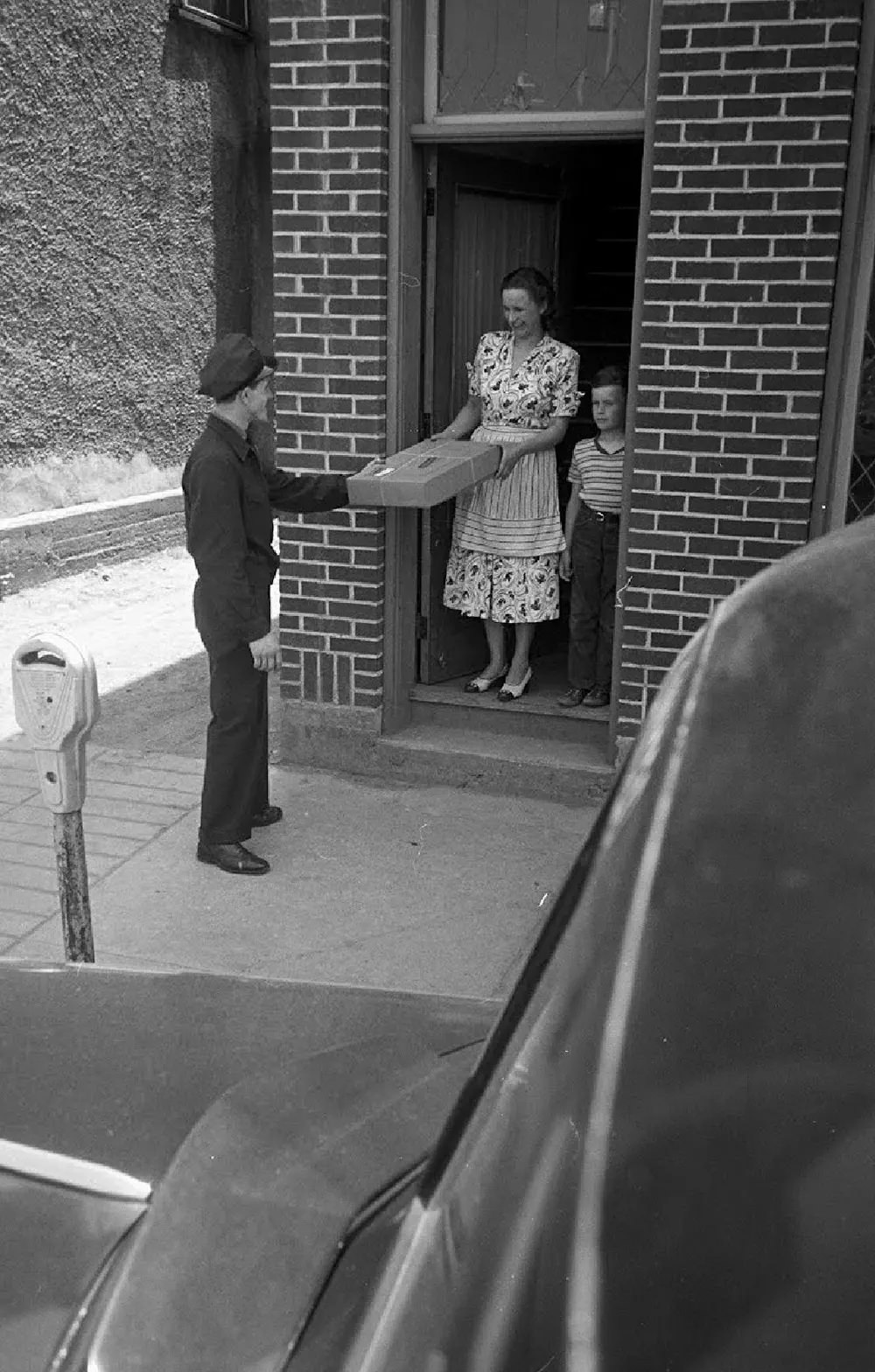
At a brick-lined doorway, a delivery worker extends a flat parcel toward a woman who has stepped out to receive it, while a child watches from the shadowed interior. The scene feels domestic and quietly modern at the same time: a transaction completed without a storefront visit, sealed in cardboard and carried right to the threshold. Even with no visible branding, the moment speaks clearly to the appeal of convenience—order first, handle the goods later.
Long before web browsers and shopping carts, companies experimented with “online” retail through dedicated screens and terminals that let customers browse selections electronically and place orders remotely. The promise was essentially the same as today’s e-commerce: fewer errands, faster purchasing, and a system built around shipping logistics rather than browsing aisles. What arrives in the courier’s hands is the final, tangible proof that the early idea worked—an interface on one end, fulfillment on the other.
For readers interested in inventions and the roots of digital consumer culture, this historical photo offers a grounded glimpse of pre-Internet online shopping in action. It reminds us that the revolution wasn’t only in screens and networks, but in the everyday routines that shifted when ordering became separated from buying in person. From that doorstep exchange to the massive delivery ecosystems of the present, the throughline is unmistakable: people have always embraced technology that turns shopping into a simple delivery at the door.