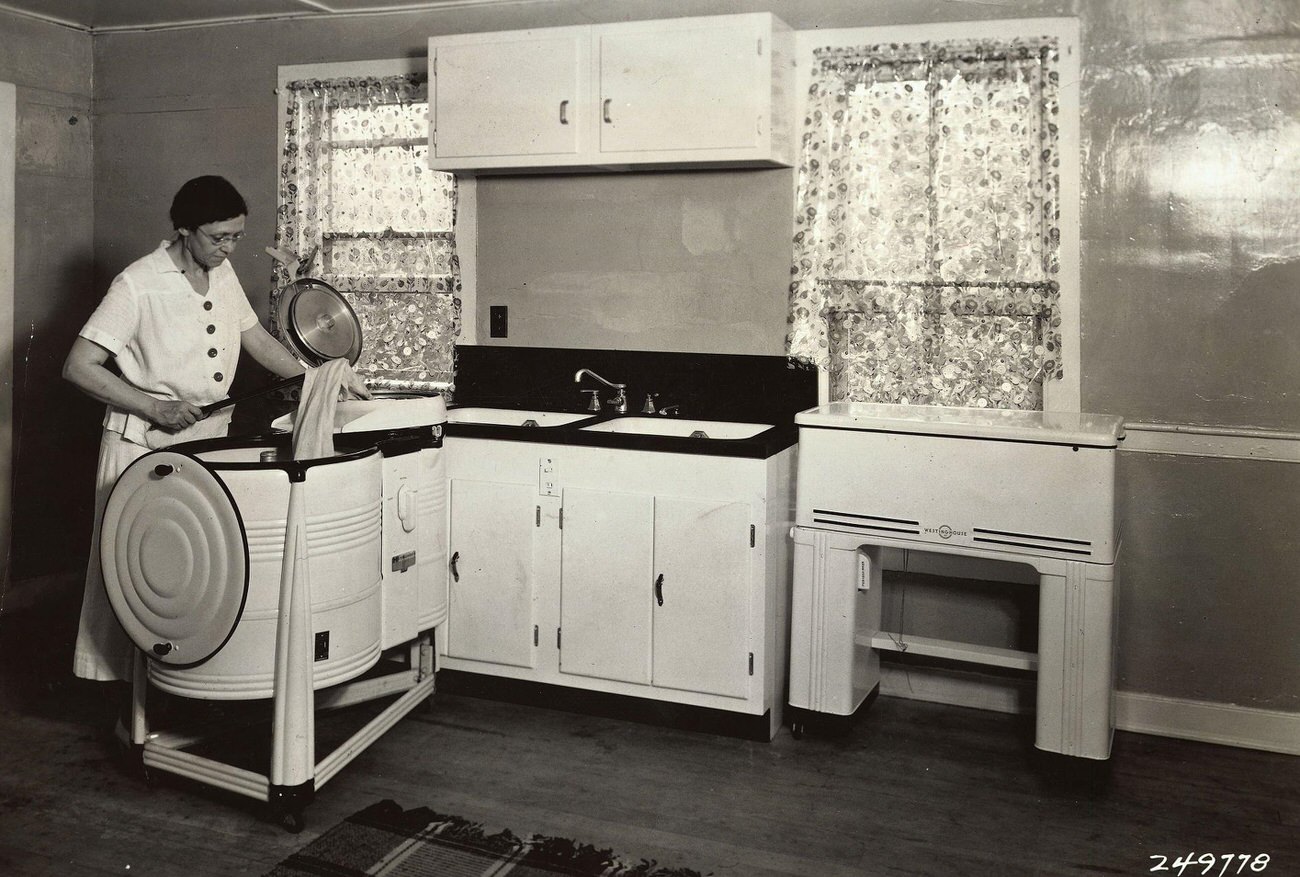
In a tidy, purpose-built laundry room, a woman leans over an early Westinghouse electric washing machine, lifting fabric from its open tub as if demonstrating the new routine of “modern” wash day. The machine’s rounded, ribbed body and prominent lid feel industrial compared with today’s sleek appliances, yet it sits confidently on a sturdy frame, signaling a shift from hand labor to powered household technology. Light filters through patterned curtains, while crisp cabinetry and a deep sink reinforce the idea that electrification was reshaping not just gadgets, but the entire workspace of domestic life.
Details in the scene hint at how manufacturers sold convenience: everything is arranged for efficiency, from the large basin nearby to the complementary equipment placed within arm’s reach. The woman’s practical dress and attentive posture suggest instruction or careful operation, a reminder that early electric laundry machines were as much about learning new controls as they were about saving effort. Even without a visible brand plate in the photo, the title’s reference to Westinghouse places it within the competitive era of American home inventions, when electric motors entered everyday routines.
For readers interested in the history of inventions, this image offers a grounded look at how the electric washing machine moved from novelty to necessity, altering time, labor, and expectations in the home. It also illustrates the early language of appliance design—sturdy metal forms, visible hinges, and an emphasis on durability—meant to inspire trust in new technology. As a historical photo for a WordPress post, it pairs strong visual storytelling with searchable themes like Westinghouse appliances, early electric laundry machines, and the evolution of home technology.