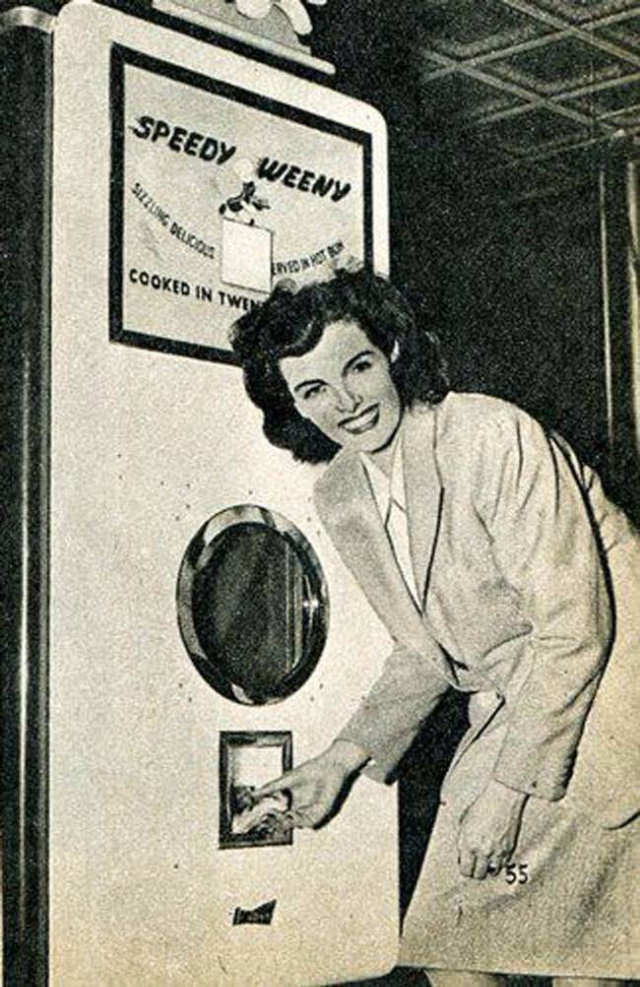
“Speedy Weeny” is the kind of cheerful promise that could only come from an age infatuated with push-button convenience. The machine’s bold sign brags about a hot dog cooked in mere seconds, while a well-dressed demonstrator leans in with a confident smile, as if the future of lunch is waiting behind that round little window. Even without a clear setting, the scene reads like a showroom moment—part advertisement, part spectacle.
Details sell the fantasy: the coin slot, the simple dispenser, the big lettering designed to catch a passerby mid-stride. It’s an invention meant to remove the human middleman and replace it with gleaming panels and a timed process, turning a humble snack into an automated novelty. The contrast between polished appliance design and the playful “weeny” branding hints at how manufacturers tried to make new technology feel friendly, not intimidating.
For anyone who loves vintage inventions and the history of vending machines, this photo is a perfect time capsule of mid-century optimism about eating on the go. The title’s joke—Let’s hope this machine is selling hot dogs—lands because these early food gadgets often looked mysterious, even slightly suspicious, before you knew what they did. Still, the appeal is obvious: quick service, a bit of theater, and the thrill of watching a machine deliver something hot and familiar.