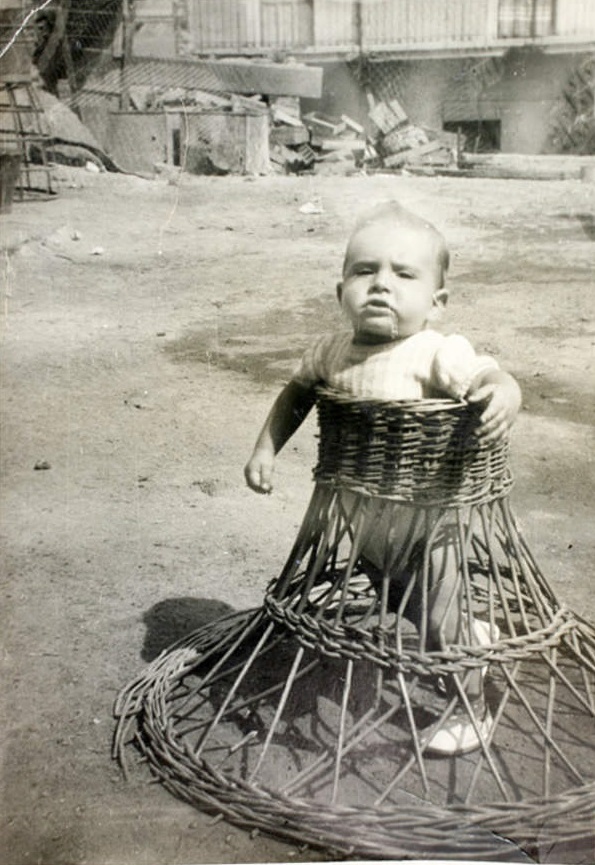
A baby stands determined in the middle of a yard, held upright by a wide wicker walking frame that flares out like a protective cage. The woven ring at the bottom keeps the little body steady while still allowing shuffling steps, and the child’s serious expression hints at the strange new effort of learning balance. Behind the scene, everyday clutter and rough ground underscore how practical these early childcare inventions were meant to be in real homes, not just in catalogs.
Wicker “walkers” like this reflect an era when parents and makers experimented with simple materials to solve common problems—keeping infants upright, entertained, and less likely to topple on uneven surfaces. Before modern plastic baby gear, basketry and cane work offered lightweight strength, and the broad footprint acted as a safety buffer long before baby-proofing became a household concept. The design also reveals a period mindset: independence could be encouraged early, but within a carefully controlled boundary.
Historical photos of babies learning to walk with a wicker frame are both charming and a little uncanny, capturing the meeting point of tenderness and ingenuity in early 1900s domestic life. They invite closer looking at textures—handwoven strands, soft clothing, dusty sunlight—and at the quieter story of how childhood was managed day to day. For collectors, researchers, and anyone fascinated by vintage inventions, this image is a vivid reminder that “modern parenting” has always involved tools, trends, and a dash of improvisation.