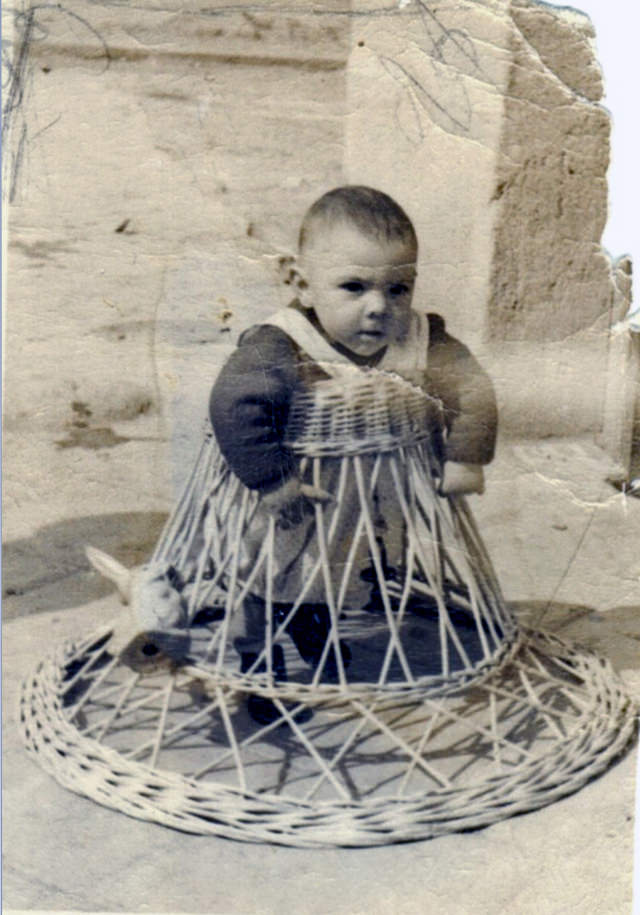
A small child stands inside a cone-shaped wicker frame, hands gripping the woven rim as if it were a tiny railing. The outfit is practical and layered, the expression focused, and the floor beneath suggests a simple outdoor or courtyard setting—exactly the kind of everyday backdrop where early family photographs were often taken. Even with its worn edges and scratches, the print preserves a striking moment: learning to balance, protected by craft and ingenuity.
Early 1900s baby-walking inventions like this wicker walking frame sat somewhere between furniture and safety device, meant to let infants practice stepping while limiting tumbles. The design reads like a basket turned into a portable corral—open enough to move, structured enough to steady an unsteady stance. It’s a reminder that long before plastic walkers and modern baby gear, households relied on handmade materials, local makers, and trial-and-error solutions to the same timeless challenge.
Browsing historical photos of babies learning to walk reveals more than parenting trends; it shows how technology quietly entered domestic life through humble objects. Wicker, cane, and rattan weren’t just decorative—they were lightweight, repairable, and widely used, making them ideal for early child-rearing contraptions. Posts like this invite readers to look closely at the intersection of childhood, invention, and daily life in the early twentieth century, one woven frame at a time.