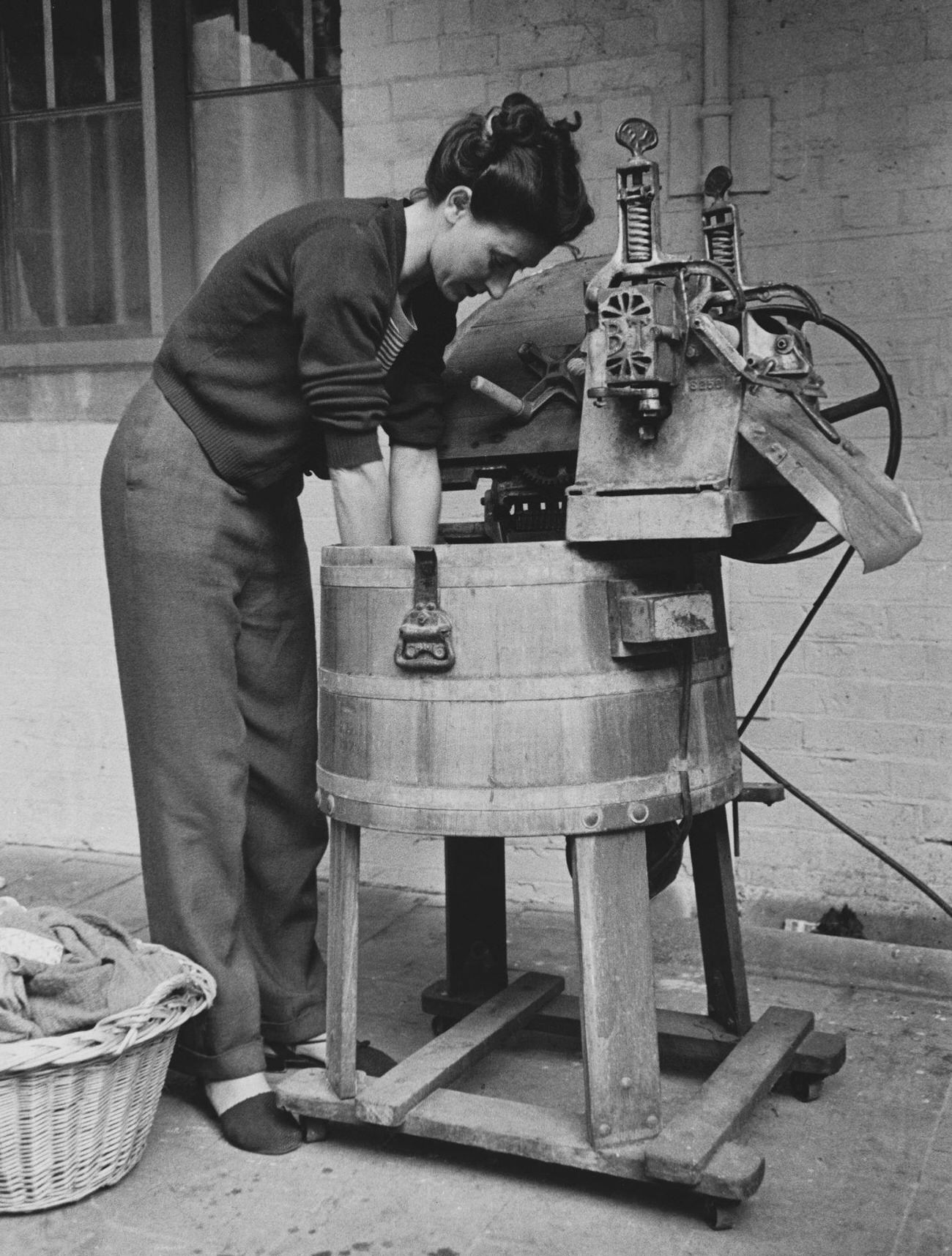
Leaning over a stout wooden tub, a woman feeds laundry into an early washing machine whose exposed gears and levers look closer to workshop equipment than to the sleek appliances that would later define the modern home. A wicker basket of clothes waits on the floor, and the whole setup sits on a simple wheeled frame, suggesting a device built for practicality rather than elegance. The brick wall and tall window behind her add a plain, workmanlike backdrop to a moment of everyday labor.
What stands out is the hybrid nature of this invention: part handwork, part mechanism, all aimed at easing one of the most time-consuming household tasks. The machine’s wringer-like components and sturdy construction hint at an era when “labor-saving” meant shifting effort into cranking, pressing, and managing heavy wet fabrics—still demanding, but newly organized around technology. In that sense, the photo is a small history of domestic innovation, where engineering entered the laundry routine in stages.
For readers interested in the history of inventions and the evolution of home appliances, this scene offers a grounded look at how washing machines changed daily life long before push-button convenience. It also invites reflection on the invisible hours that laundry once consumed, and on how mechanical design shaped expectations of cleanliness, efficiency, and modern living. A single task, an industrial-looking machine, and a basket of clothes together tell a larger story about progress measured in smaller burdens.