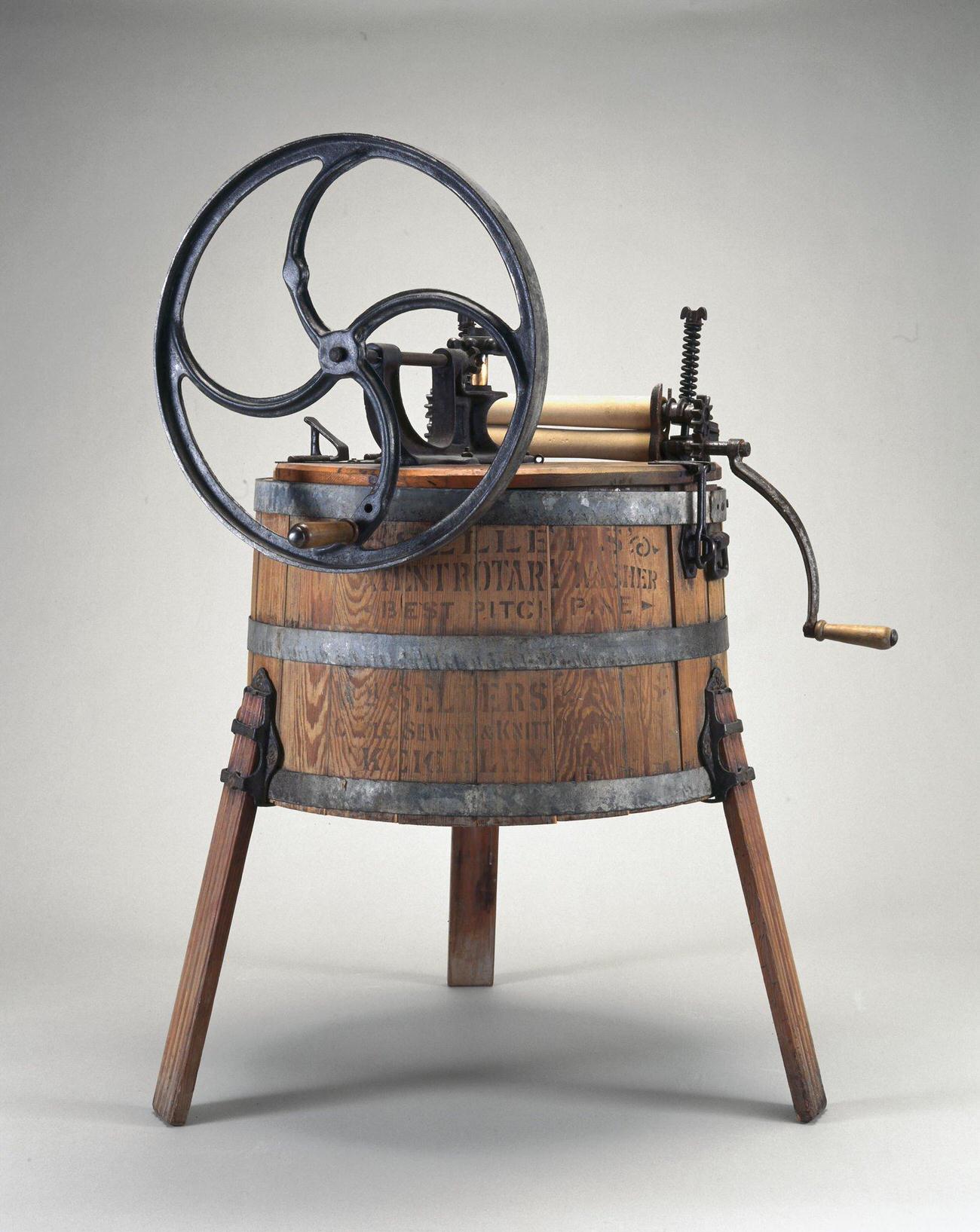
Set on sturdy legs like a small workbench, William Sellers’ hand-operated wooden washing machine from 1890 reads as both household tool and piece of workshop engineering. The tub is built from vertical wooden staves cinched by metal hoops, while a heavy cast-iron flywheel dominates the upper left, hinting at the human effort required to power the mechanism. Faint lettering on the barrel-like body suggests a maker’s mark or painted branding, now softened by age and use.
Turning the side crank would have driven the gears and rollers mounted across the top, translating muscle into steady motion for agitating and wringing cloth. The contrast of warm wood grain and dark iron hardware speaks to late 19th-century manufacturing, when domestic inventions often borrowed the language of industrial machines. Springs, clamps, and precision joints show an emphasis on durability—built to live in a washhouse where water, soap, and constant strain were unavoidable.
Laundry history often hides in plain sight, yet devices like this mark a transition between washboard labor and the electrified washing machines that would later reshape daily life. For collectors and readers interested in antique inventions, early home appliances, and the evolution of domestic technology, this photograph offers a clear look at how innovation entered the most routine chores. Sellers’ 1890 washer stands as a reminder that progress was frequently measured not in spectacle, but in minutes saved and hands spared.