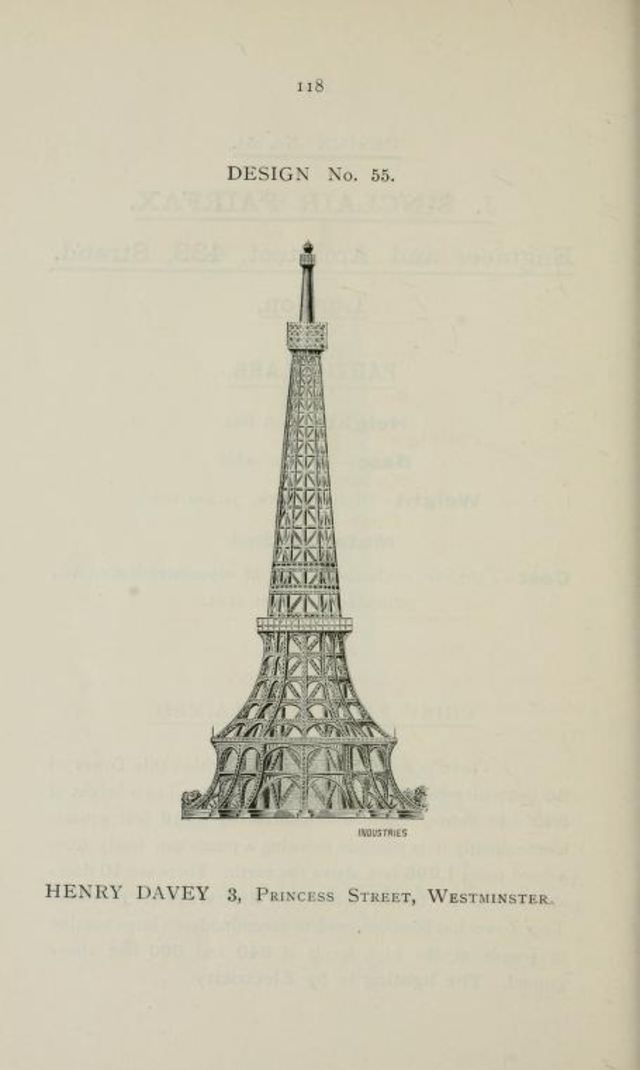
Ambition hangs in the air of this page: “Design No. 55” rises as a slender iron-lattice tower, its broad, arched base supporting a tapering shaft crowned with a small lantern-like cap. The draughtsmanship emphasizes engineering bravura—repeating truss patterns, curved supports, and layered platforms—suggesting a structure meant to be both spectacle and statement, the sort of Victorian-era invention that promised modernity through height.
Set against the post’s theme of 50+ competitive submissions for a proposed Great Tower for London, the drawing reads like one voice in a crowded chorus of ideas. The captioning anchors it as a formal entry, complete with “Industries” noted beneath the base, hinting at an exhibition-minded project where architecture, commerce, and civic pride were expected to meet in a single skyline landmark.
For readers interested in London history, 19th-century design competitions, and the era’s fascination with monumental engineering, this illustration offers a vivid glimpse into what might have been. It’s a reminder that iconic structures are often preceded by dozens of bold alternatives—carefully inked dreams on paper—each competing to define the city’s future with a new great tower.