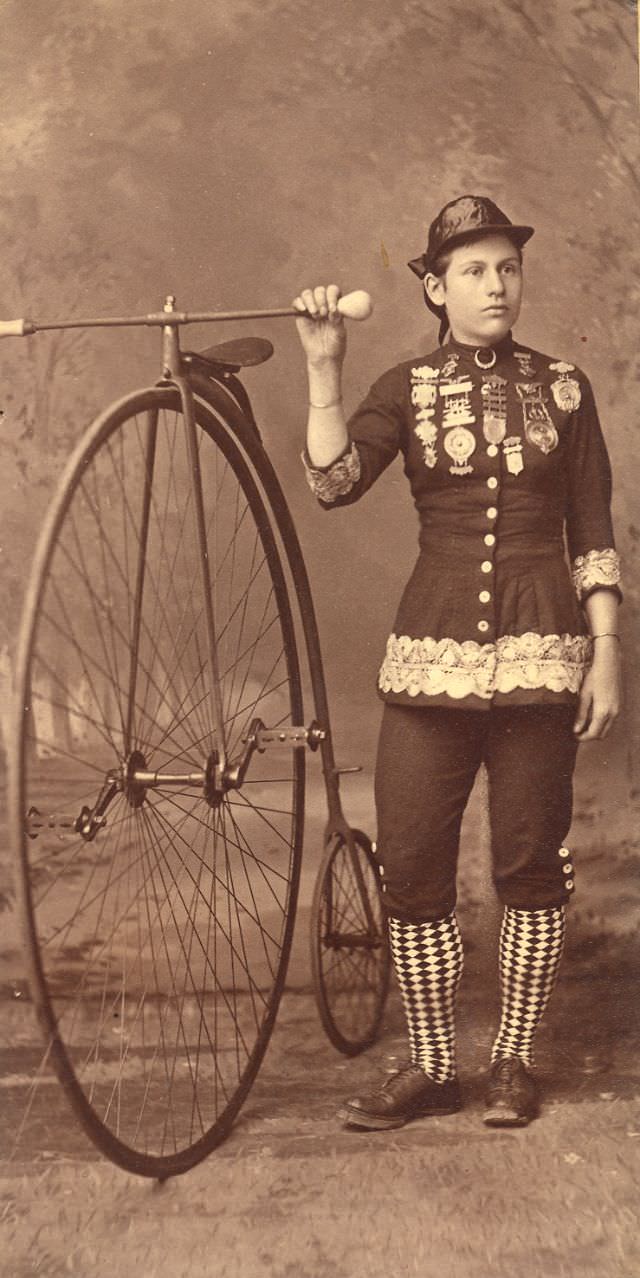
Poised beside an imposing penny-farthing, a young cyclist stands with quiet confidence, one hand resting on the long handlebar as the towering front wheel dominates the frame. The studio backdrop and careful lighting turn this into more than a simple portrait; it becomes a statement about modernity, speed, and the daring balance required by early high-wheel bicycles. Every spoke and mechanical detail invites a closer look at the engineering that made Victorian-era cycling such a fascination.
What draws the eye next is the rider’s attire: a buttoned tunic decorated with an array of medals or badges, lace trim at the cuffs, and striking patterned stockings that feel both practical and theatrical. Clothing in photographs like this often served as proof of identity and achievement, suggesting cycling clubs, competitions, or a culture of display that grew around the new invention. The result is a vivid snapshot of how riders used fashion and honors to signal skill, status, and belonging in the penny-farthing era.
From an inventions perspective, the contrast between the enormous driving wheel and the much smaller rear wheel captures the design logic of the time—gear ratios achieved through sheer diameter, long before chains and “safety bicycles” became standard. Vintage cycling photographs like this help trace the leap from novelty to social phenomenon, documenting how technology reshaped everyday life and leisure. For readers searching penny-farthing history, antique bicycle images, or early cycling culture, this post offers a timeless window into the bravado and craftsmanship that defined the high-wheel age.