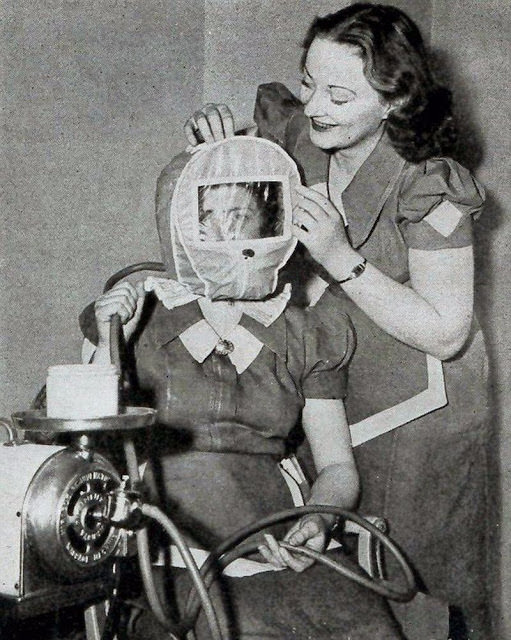
A stark blend of domestic calm and emergency preparedness runs through this 1940s scene, where a seated woman wears an “asphyxia hood” while another adjusts it with practiced care. The hood’s fabric gathers around the face, leaving a clear window over the eyes and nose, and a hose leads down toward a compact mechanical unit on the table. Even without a dramatic backdrop, the setup hints at anxieties of the era—air safety reduced to something that could be fitted in a living room or clinic-like corner.
Details in the photograph draw attention to the device as an invention rather than a costume: the tubing, the metal housing, and the deliberate way the hood is positioned to seal around the head. The women’s tidy dresses and composed expressions add to the unsettling normality, suggesting a demonstration intended to reassure, instruct, or sell. It reads like a moment when technology promised control over invisible threats—smoke, gas, or oxygen deprivation—through wearable protection.
For readers exploring inventions of the 1940s, this image offers a vivid entry point into how safety gear was marketed and handled, especially when fear and innovation moved side by side. “Asphyxia hoods” sit at the crossroads of medical apparatus, civil defense, and consumer-ready emergency equipment, emphasizing function over comfort. Use this photo to consider what everyday preparedness looked like in the mid-century imagination—and how a simple hood and hose could symbolize both vulnerability and modern ingenuity.