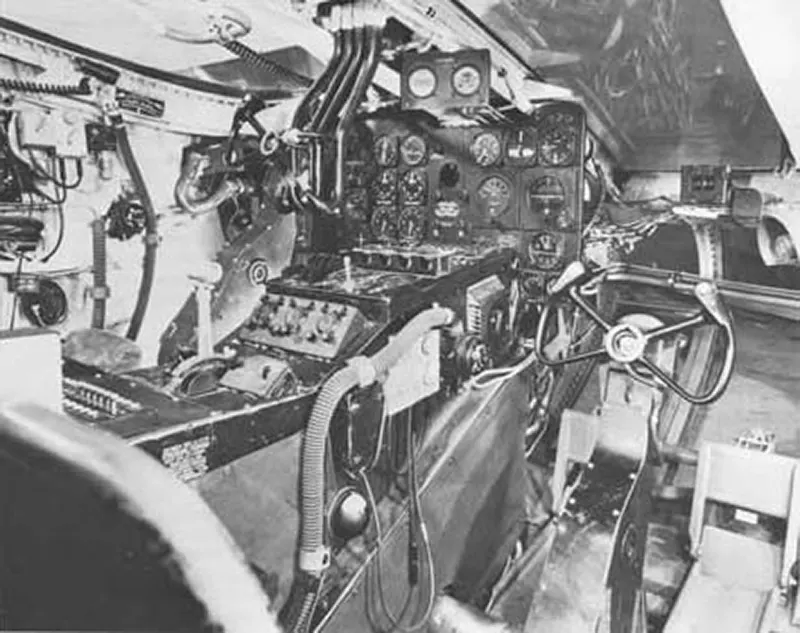
Inside the XB-35 bomber’s cockpit, the eye is drawn immediately to a crowded instrument panel where round dials, switches, and warning lights compete for attention. Cables and conduits run along the structure like veins, reminding you that this was an era when “fly-by-wire” was still a dream and the pilot’s world was equal parts engineering and intuition. The tight, purposeful layout hints at long hours spent interpreting needles and gauges, translating mechanical language into steady flight.
What makes the XB-35 so infamous in aviation history isn’t just the dramatic promise of the flying-wing concept, but the sheer complexity required to make it behave like a conventional aircraft. The photo’s dense controls and layered systems speak to experimental ambition: pushing range, efficiency, and stability without the familiar fuselage-and-tail arrangement. Each clustered dial suggests a problem being solved in real time—power management, control response, and the constant balancing act that advanced bomber inventions demanded.
For readers searching the story behind the Northrop XB-35, this archival view offers a grounded counterpoint to the aircraft’s sleek reputation from the outside. Mystique often comes from silhouette and legend, yet mastery is visible here in metal brackets, labeled knobs, and the practical choreography of cockpit workflow. It’s a reminder that breakthroughs in military aviation are built as much in cramped, instrument-filled compartments as they are in bold aerodynamic sketches.