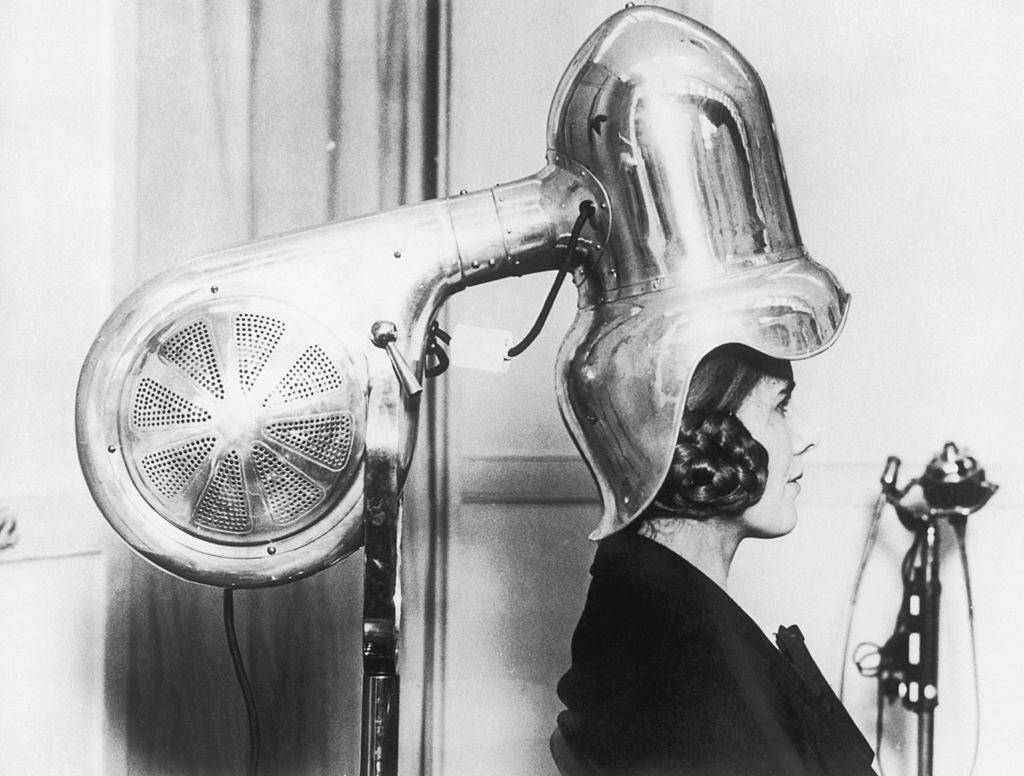
A polished metal hood descends over a salon client’s carefully set curls, its bulbous form and riveted seams looking more like industrial equipment than a beauty aid. Off to the side, a large fan housing with a perforated grille hints at the noisy machinery that powered early hair drying, pushing heated air through ducts and into these oversized caps. The effect is both futuristic and faintly intimidating—an invention meant to modernize personal grooming, yet shaped by the engineering language of its day.
Hair dryer models across the 20th century often began as adaptations of larger ventilation and heating ideas, and the photo’s scale makes that lineage easy to imagine. Before compact handheld blow dryers became commonplace, many households and salons relied on standing, hooded devices that demanded time, patience, and a willingness to sit still while hot air did its work. Those elaborate designs weren’t just quirks; they were stepping stones in the broader story of how electricity and consumer appliances reshaped daily routines.
Browsing these historical photos today, the “bizarre” factor is part of the appeal, but it also reveals real priorities—speed, safety, comfort, and style—being negotiated in metal and wiring. The heavy casing and prominent airflow unit suggest an era when durability and function outweighed portability, even in beauty technology. For readers fascinated by 20th century inventions, this kind of hair dryer is a vivid reminder that the path to the sleek modern blow dryer was anything but straightforward.