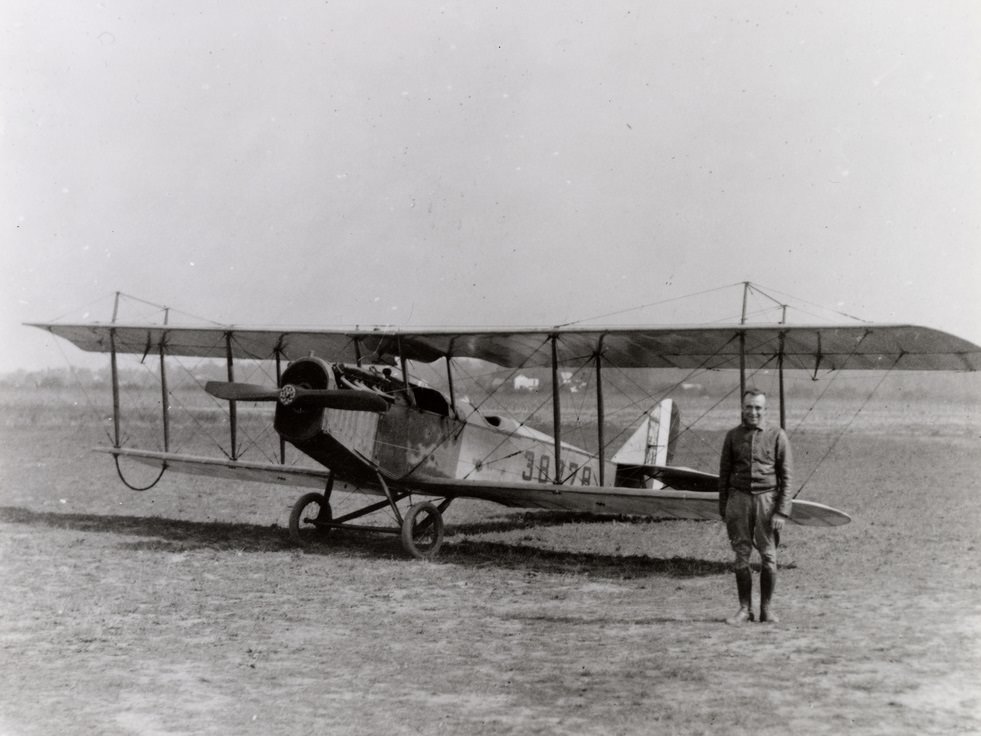
Eddie Gardner stands beside an airmail biplane in 1918, grounded for a moment on an open field that serves as its runway. The aircraft’s long wings, web of struts and wires, and exposed engine compartment speak to a time when flight was still a hands-on craft, more workshop than factory floor. The painted markings on the fuselage hint at official use, while the pilot’s calm pose suggests pride in a new kind of work that was quickly becoming essential.
Early airmail service depended on machines like this—lightweight, fabric-covered airplanes built for practicality rather than comfort. From the narrow wheels to the simple cockpit, everything here reads as purposeful: carry the post, land wherever you can, then do it again. In an era before modern navigation aids and paved airfields, pilots and planes had to be rugged partners, with reliability measured in improvisation as much as in engineering.
For readers interested in inventions and the history of aviation, this photograph offers a vivid window into how mail delivery and air travel grew up together. Airmail flights helped prove that aircraft could connect distant communities with speed that rail and road could not match, accelerating public trust in the airplane as a tool of everyday life. Gardner and his machine embody that transition—when daring experimentation began turning into a working network in the skies.