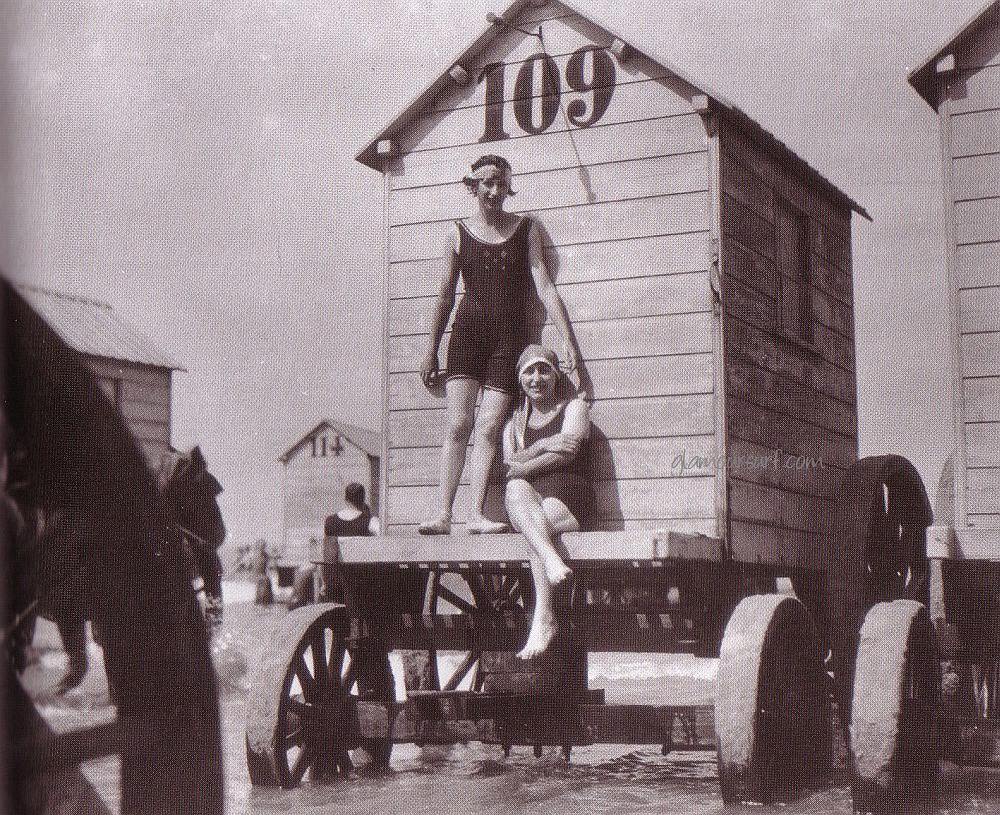
Perched on a wheeled wooden hut marked “109,” two bathers pause in their early swimwear as the beach scene drifts into the background—other numbered shelters, open sand, and the hint of a working shoreline. The structure’s raised platform and sturdy wheels make it look more like a little wagon than a changing room, a reminder that going for a dip once involved as much logistics as leisure. Even without a named place or precise date, the details speak clearly to the era’s practical ingenuity.
Bathing machines were designed to solve a social problem: how to reach the water without being seen in states of undress. Rolled toward the surf by people or animals, these mobile cabins offered privacy for changing and, in some cases, a sheltered step down into the sea. In photos like this, the numbered doors and neat ranks of huts turn the shoreline into an organized, almost regulated space—part seaside holiday, part moral architecture.
Going Swimming On Wheels gathers more than 50 historic photos of Victorian-era bathing machines, tracing how modesty, technology, and recreation met at the water’s edge. Expect a mix of candid beach moments and inventive design, from simple timber boxes to larger rolling cabins that resemble miniature beach houses. If you’re searching for vintage seaside history, early swim culture, or the curious inventions that shaped public bathing, this collection delivers a vivid look at a world where even a swim had wheels.