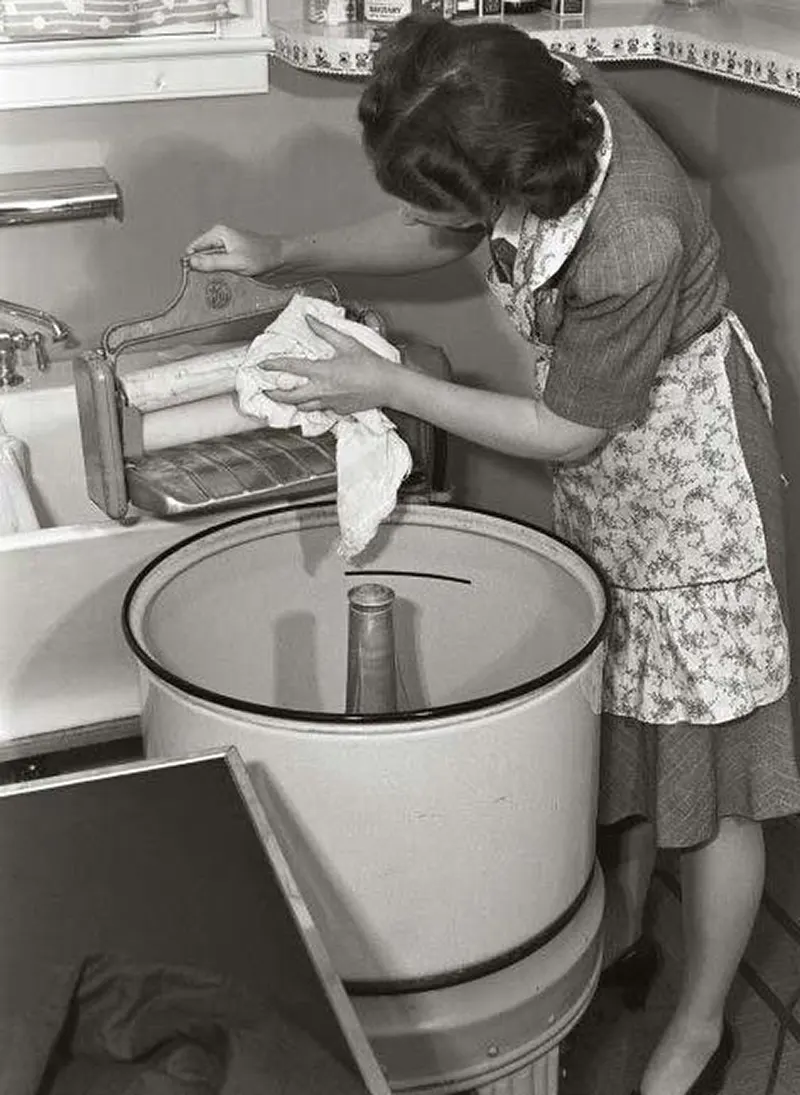
Leaning over a deep, round-tub washer in a tight laundry nook, a woman guides wet fabric through a hand-fed wringer, turning a simple household task into a small mechanical ritual. The coiled hose, nearby sink, and sturdy metal drum hint at a transitional moment when washday was shifting from muscle-powered scrubbing to machine-assisted work. Details like these make the early washing machine feel less like an “invention” on paper and more like a lived experience—noisy, damp, and demanding.
From the 1880s through the 1950s, washing machine design evolved through practical experiments: tubs and agitators, wringers and rollers, and eventually safer, enclosed systems that aimed to tame the hazards of exposed moving parts. Photos like this spotlight the in-between years, when technology promised relief but still required constant attention—hands close to the mechanism, eyes on the fabric, and a careful rhythm to avoid snags. It’s a reminder that domestic innovation often arrived in stages, each step trading one kind of labor for another.
Alongside the story of laundry technology sits a wider history of home life, consumer manufacturing, and changing expectations of cleanliness and convenience. Early washers didn’t simply replace washboards; they reshaped kitchens, utility spaces, and daily schedules, pushing electrification and modern plumbing from luxury to standard feature. For readers tracing the history of washing machines, this photographic journey offers a grounded look at how ordinary people met new machines halfway—adapting routines as quickly as the inventions themselves changed.