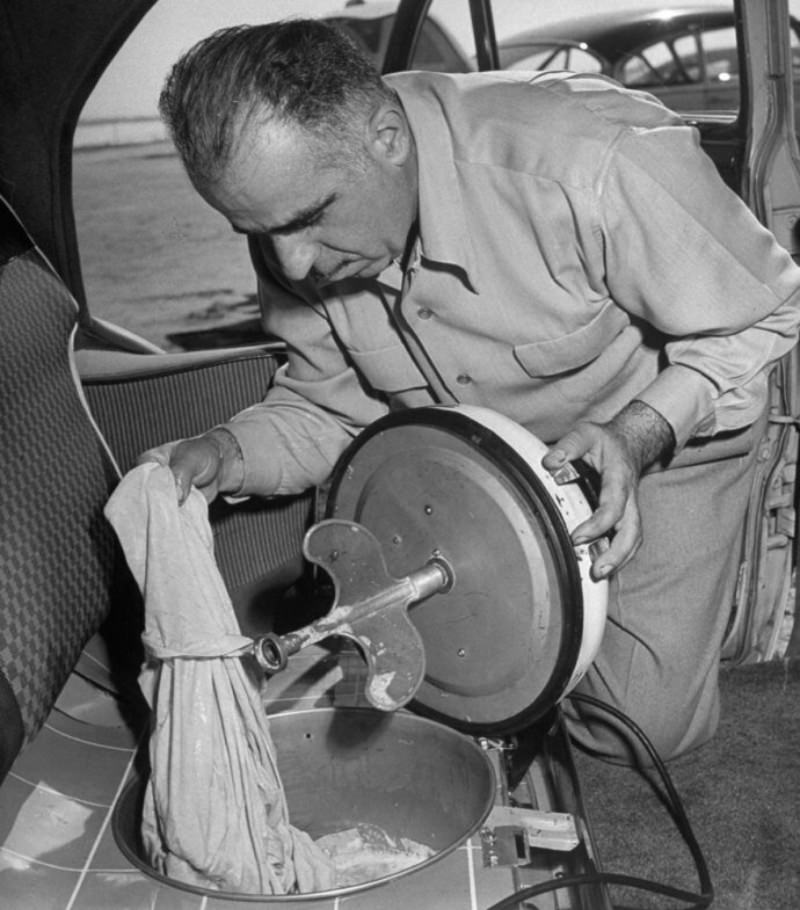
Leaning into the open back seat of a car, a man tends to a compact washing setup that looks more like workshop hardware than a household appliance. The lid is lifted to reveal a small tub with sudsy water, and a cloth bag of laundry is being lowered in, suggesting a practical, hands-on approach to cleaning while on the move. Details like the patterned upholstery and the tight fit of the device against the interior hint at an era when do-it-yourself ingenuity was expected to live alongside everyday travel.
The post title points to the clever heart of the invention: a “small machine” operating from the back seat, powered by two extra batteries to supply more electricity than a standard vehicle system might provide. Rather than waiting for a laundromat or returning home, this setup imagines the automobile as a self-contained service station—part transport, part utility room. It’s an early reminder that the dream of portable appliances didn’t begin with sleek modern gadgets; it was often built with bulky parts, visible wiring, and a willingness to experiment.
Seen today, this historical photo of a car-mounted washing machine sits neatly in the broader story of mid-century innovation and roadside self-sufficiency. Travelers, hobbyists, and tinkerers frequently tried to extend the comforts of home into the car, from cooking devices to power supplies, and laundry was simply another frontier. For readers interested in unusual inventions, vintage technology, and the evolution of portable living, the image offers a vivid glimpse of creativity squeezed into the most ordinary of spaces: the back seat.