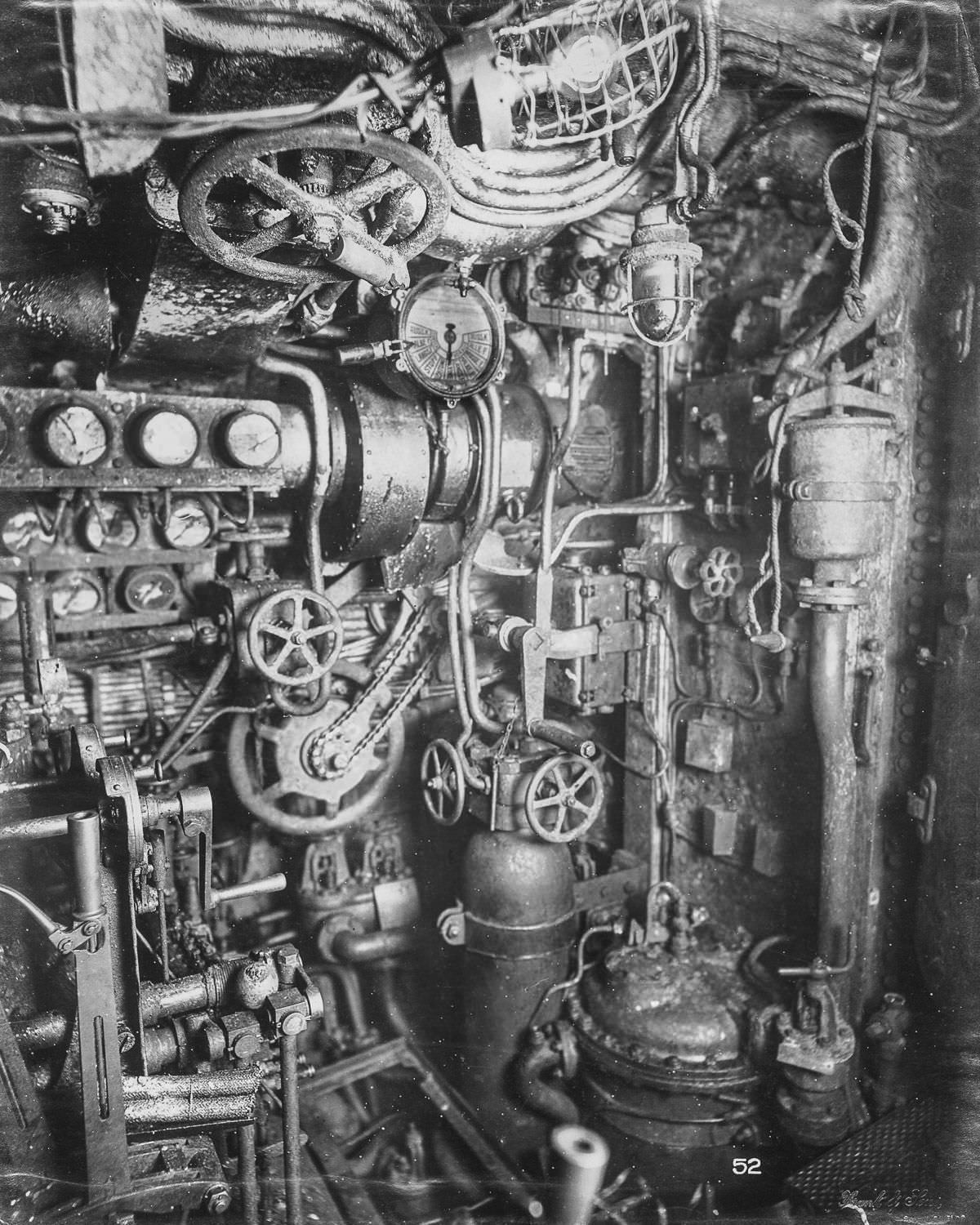
Deep inside a diesel engine room, the world narrows to metal, heat, and measurement. The photograph is crowded with handwheels, valves, and tight runs of piping, all packed into a working space where every component has a job and every job leaves its mark in oil sheen and worn paint. A dial gauge sits at the center like a calm eye, reminding us that early diesel power was as much about careful monitoring as raw force.
Look closely and the logic of the system begins to emerge: control wheels placed within quick reach, linkages and fittings arranged to be adjusted mid-run, and clusters of instrument faces that translate pressure and flow into readable decisions. The protective cage around a light hints at the constant risk of impact in confined quarters, while the heavier housings and reservoirs suggest filtration and lubrication—unglamorous but essential allies of reliability. It’s a portrait of invention in practice, where engineering becomes daily routine.
Industrial history often gets told through grand ships, locomotives, or factory skylines, yet rooms like this are where diesel technology proved itself—minute by minute, shift by shift. The dense arrangement speaks to an era when maintenance was hands-on and systems were designed to be listened to, watched, and felt by the crew. For readers interested in diesel engines, mechanical engineering, and the heritage of power generation, this image offers an intimate, SEO-friendly window into the machinery that powered modern life behind the scenes.