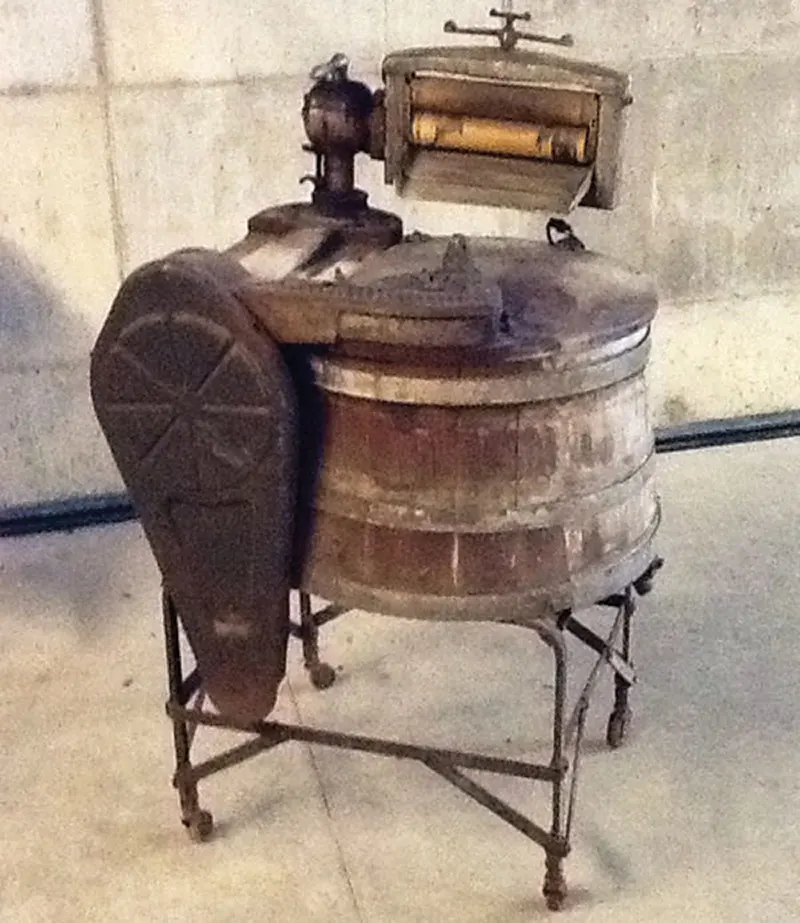
A stout, barrel-bodied rotary machine stands on spindly metal legs, its round lid and belt-driven side housing suggesting a time when power and motion were translated through pulleys, gears, and steady hands. The worn surfaces hint at long use, while the compact frame—set above small wheels—speaks to workshop practicality rather than showpiece elegance. Even without a maker’s mark visible, the design reads as mid-19th-century ingenuity: durable, mechanical, and built to work.
Above the main drum sits a smaller roller assembly beneath a curved cover, a clue that rotation and pressure were central to its function. The long looped belt and the heavy casing at the side evoke an era of early industrial equipment, when machines were increasingly standardized yet still carried the character of local fabrication and repair. Details like the layered metal bands around the drum and the robust fittings invite close looking, especially for readers interested in antique machinery, engineering history, and the evolution of rotary mechanisms.
Titled “The Rotary Machine, 1858,” this historical photo fits neatly into a broader story of inventions that reshaped everyday labor—quietly, incrementally, and sometimes in workshops like the one implied by the plain tiled backdrop. For anyone researching 19th-century technology, early industrial design, or the rise of rotary-driven devices, the image offers a tactile reminder of how innovation often arrived: not as sleek futurism, but as practical metalwork meant to endure.