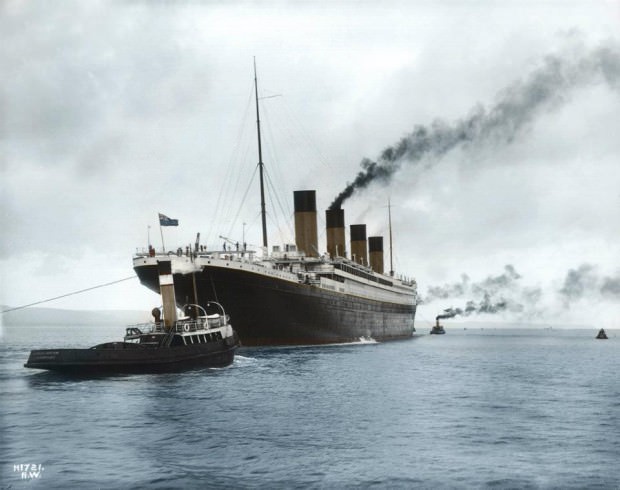
Dominating the frame, the RMS Titanic advances across calm water like a moving city, her dark hull rising steeply from the sea while small escort boats cluster nearby for scale. A line of funnels sends smoke streaming into the pale sky, and the ship’s crisp superstructure hints at the immense planning and labor that went into turning steel, steam, and ambition into an ocean-going icon. The scene carries the unmistakable mood of a grand departure, when modern engineering promised speed, comfort, and prestige in equal measure.
Behind that imposing silhouette lies the story of construction-era innovation—shipyard methods, riveting and plating on an unprecedented scale, and the coordinated work of thousands who built liners as symbols of national and industrial pride. The Titanic’s rise to fame was fueled as much by her design choices as by the era’s faith in technology: watertight subdivision, powerful engines driven by steam, and a level of onboard refinement meant to rival the finest hotels. Even in a single photograph, the balance of utility and luxury comes through in the tidy lines of decks, masts, and promenades.
For readers searching for Titanic construction history, early 20th-century maritime inventions, or the engineering legacy of great ocean liners, this post uses the image as a doorway into the making of the “unsinkable” myth and the world that believed it. The smoke trail, the attentive tugs, and the ship’s commanding presence all suggest how carefully such voyages were staged—and how eagerly the public followed each milestone from build to launch to headline-making service. Seen today, the photograph invites both admiration for industrial achievement and reflection on the powerful stories that technology can inspire.