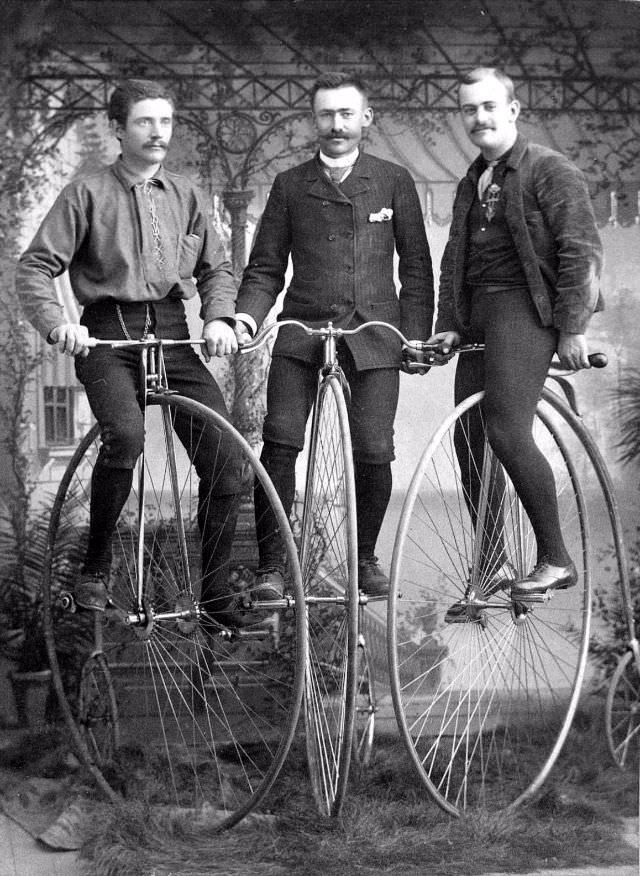
Poised beneath an ornate ironwork backdrop, three cyclists stand with the unmistakable confidence of the penny-farthing era, hands resting on swept handlebars and eyes fixed on the camera. The towering front wheels dominate the frame, a reminder that early cycling was as much about balance and bravado as it was about speed. Clothing details—high collars, tailored jackets, and sturdy boots—underscore how riders blended sport with everyday style in the age of mechanical novelty.
Look closely at the machines and the story of invention becomes visible: minimal frames, direct-drive pedals on the oversized front wheel, and slender spokes engineered to be light yet strong. These high-wheel bicycles were marvels of their time, built for smoother rolling over rough roads even as their height demanded skill and nerve. The photograph’s careful posing hints at pride in new technology, when cycling culture was forming and modern mobility still felt thrillingly experimental.
Collectors and history lovers alike will appreciate how images like this preserve the social side of early bicycle history—friends, clubs, and the quiet prestige of owning cutting-edge transport. For anyone searching vintage cycling photographs, penny-farthing history, or the inventions that shaped the modern bicycle, this scene offers a grounded, human snapshot of innovation in motion. It’s a timeless window into the moment when two wheels—and one very big one—helped redefine freedom on the road.