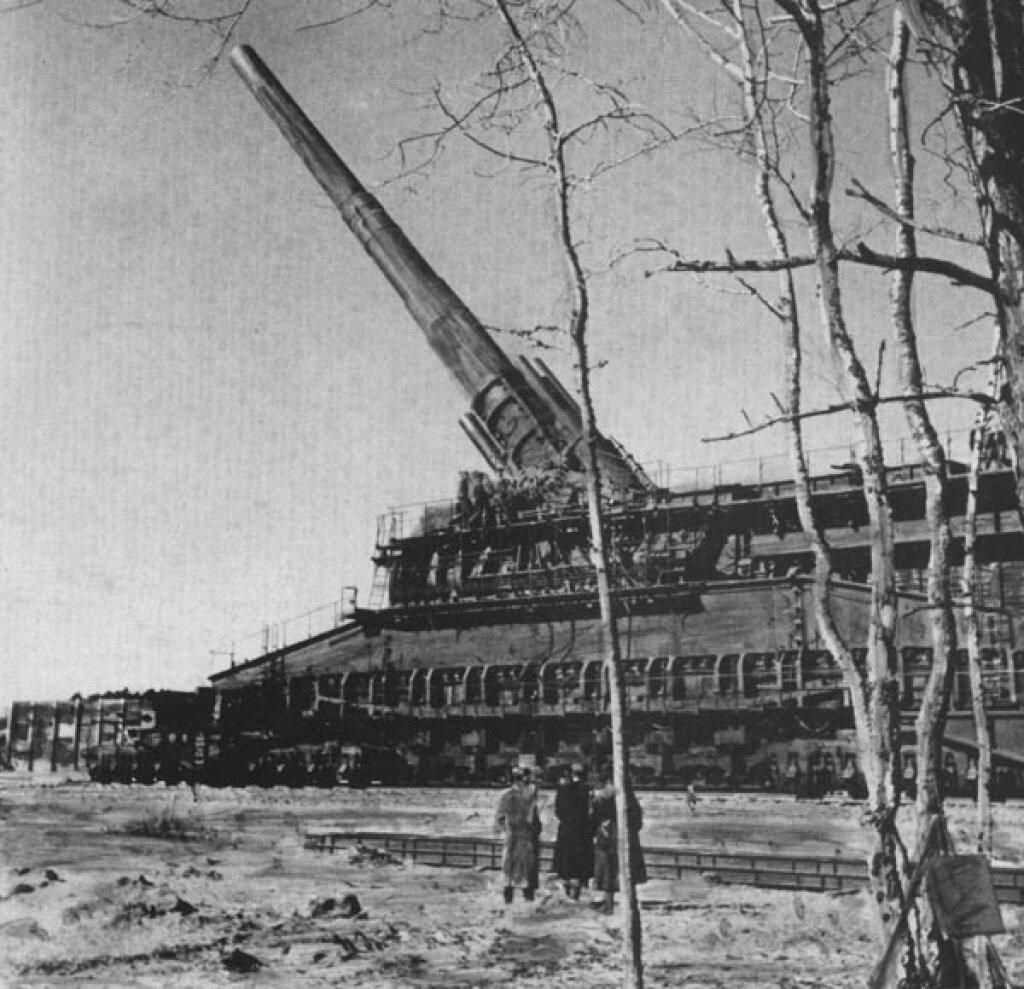
A colossal artillery barrel rises at an angle above a lattice of platforms and rail-mounted machinery, dwarfing the bundled figures gathered near its base. In the stark winter landscape, bare trees frame the scene and make the scale feel even more unreal, as if the weapon has been set down like an industrial monument. The photo’s grainy distance only adds to the intimidation: you can sense the mass of steel, the complexity of the mounting, and the logistical choreography required just to move it.
Known as the Gustav Gun, this astonishing relic of Nazi engineering inventions embodied a wartime obsession with superweapons—projects that pushed metallurgy, rail transport, and mechanical design to extremes. The image hints at the system behind the gun: layered walkways, maintenance access, and an immense carriage built for a single purpose, suggesting that “mobility” meant rails, crews, and planning rather than battlefield agility. Looking closely, the human presence becomes the measuring stick, turning abstract numbers about size and range into something instantly comprehensible.
For readers interested in World War II military technology, the Gustav Gun is a case study in the tension between spectacle and practicality, where engineering ambition collided with real-world constraints. This post pairs the historical photo with a closer look at what made such massive artillery possible, why regimes invested in these machines, and what their legacy tells us about industrialized warfare. It’s a reminder that behind every extraordinary invention lies a story of resources, strategy, and the human cost that never appears in the blueprint.