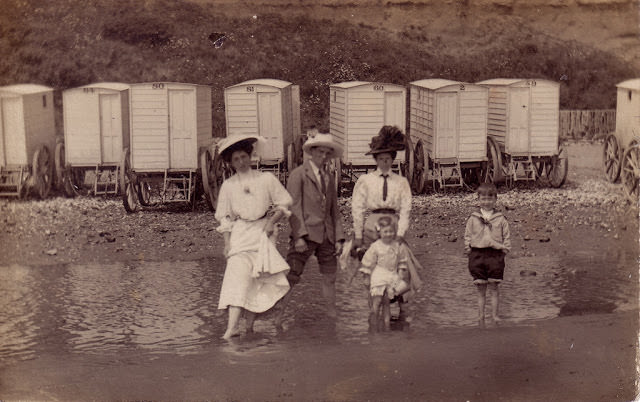
Along a calm shoreline, a neat row of bathing machines sits like a temporary village, their numbered wooden cabins lined up on tall wheels and backed by scrubby dunes. In the shallow water in front, a small group wades in fully dressed: women in long light garments and wide hats, a man in a jacket and straw boater, and two children at their side. The scene neatly captures the curious balance Victorian seaside culture tried to strike between leisure and strict modesty.
Bathing machines were more than quirky inventions; they were a practical solution to the era’s social rules, offering privacy for changing and sometimes being hauled closer to deeper water. The details here—the orderly ranks of mobile huts, the careful clothing, the tentative steps into the surf—hint at a beach day governed by etiquette as much as by weather. Even without pinpointing a specific resort, the photograph speaks to how widespread these wheeled “swimming rooms” became along popular coasts.
Going Swimming On Wheels gathers more than 50 historic photos of bathing machines to show how this once-common technology shaped seaside holidays from the Victorian era onward. You’ll see the machines as architecture, as transportation, and as social ritual—part changing room, part privacy screen, part spectacle on the sand. For anyone interested in maritime history, vintage beach life, or the evolution of swim culture, these images turn an old invention into a vivid story.