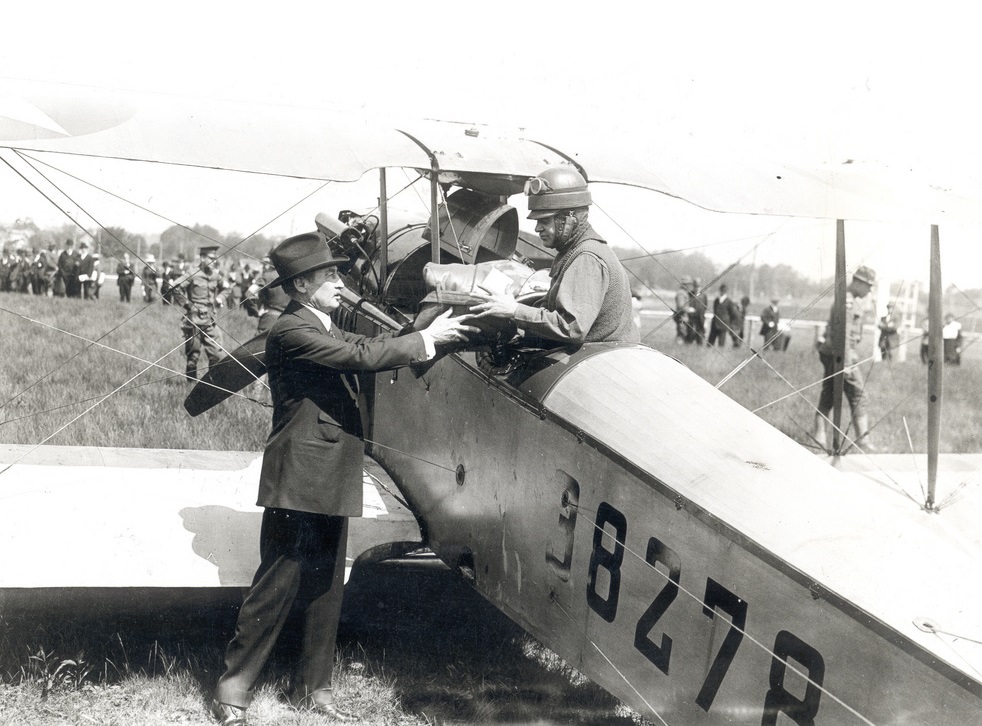
A suited official in a brimmed hat reaches up from the grass to pass a bundled package into the hands of a uniformed aviator perched beside an open cockpit. The title identifies them as New York City Postmaster Thomas G. Patten and pilot Lt. Torrey Webb in 1918, and the moment feels like a ceremonial handoff—mail becoming cargo for a machine still new enough to draw attention. Stretched wings, taut bracing wires, and a large number painted along the fuselage frame the exchange with the unmistakable profile of an early aircraft.
Behind the airplane, scattered onlookers stand in the field as if witnessing a demonstration of what “modern delivery” might look like. The pilot’s headgear and goggles, the exposed engine area, and the close quarters of the cockpit hint at how experimental and demanding early flight could be, even for practical tasks like transporting letters and parcels. That blend of civic routine and aviation daring connects neatly to the era’s obsession with inventions—turning public services into showcases for new technology.
Seen today, the photo reads as a small chapter in New York City postal history and a vivid snapshot of early air mail culture during the World War I period. It suggests how quickly airplanes moved from spectacle to infrastructure, with officials eager to attach the authority of the Post Office to the promise of speed. For readers interested in 1918 New York, vintage aviation, or the roots of air mail delivery, this image offers texture and immediacy: progress measured in a single package passed from one set of hands to another.