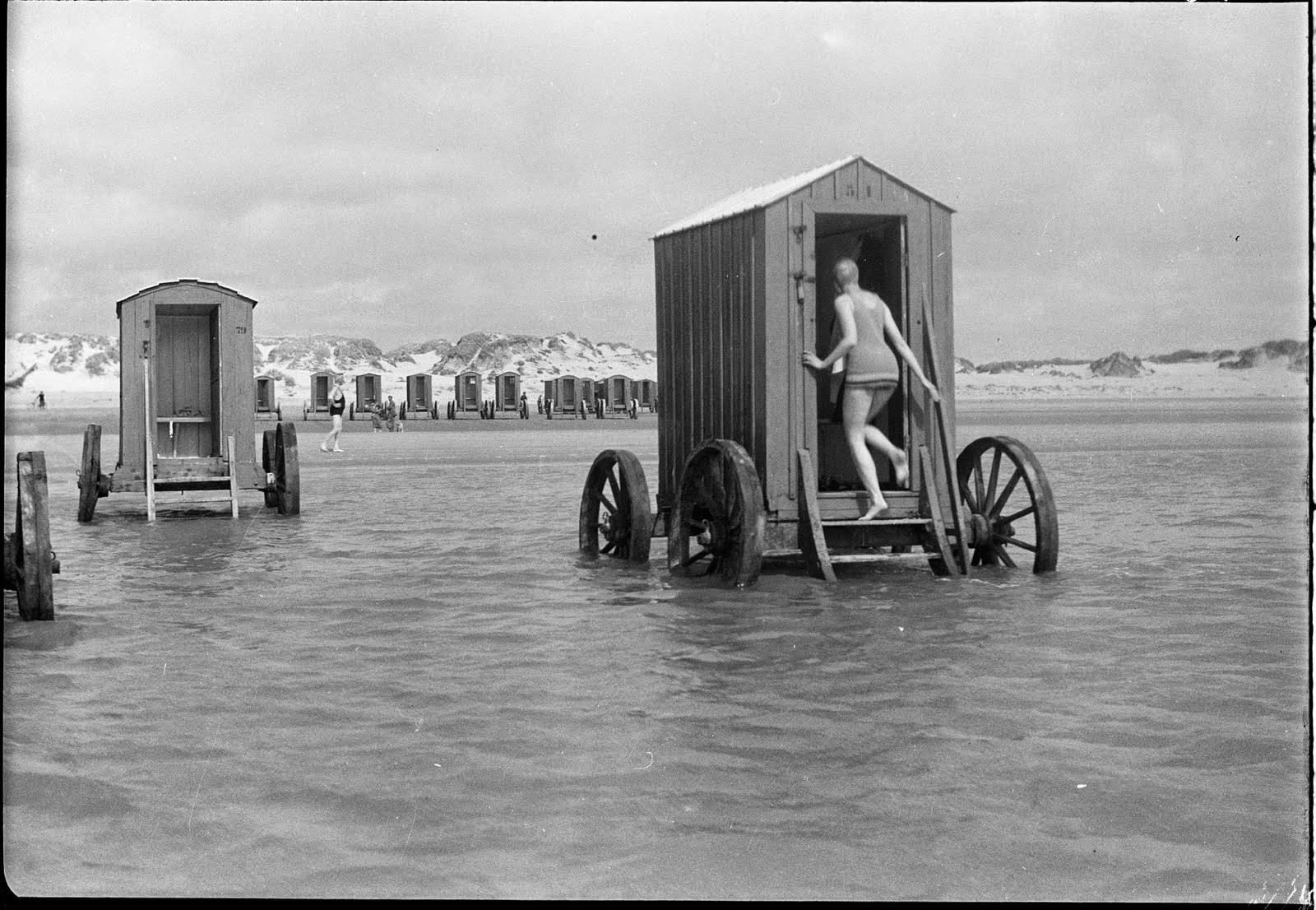
Wheeled wooden huts sit half-submerged at the edge of the sea, their big spoked rims hinting at a peculiar kind of seaside transport. One bather steps down from the doorway into shallow water while more bathing machines line the beach behind, creating a repeating pattern of tiny cabins against pale dunes. The scene feels both practical and theatrical—an everyday beach visit choreographed around privacy, propriety, and the slow roll of timber on sand.
Bathing machines were among the Victorian era’s most recognizable inventions for respectable sea bathing, functioning as portable changing rooms that could be moved closer to deeper water. Instead of parading across the shore in swimwear, bathers could enter discreetly, change inside, and emerge near the surf with far fewer eyes on them. Looking closely, you can almost sense the mechanics at work: the sturdy frame, the door and steps, and the deliberate choice of wheels built to handle uneven ground and wet tide flats.
Going Swimming On Wheels gathers more than 50 historic photos that trace how these beach contraptions shaped coastal leisure and early swim culture. Each image offers clues about class, modesty, and technology—how a simple box on wheels mediated the relationship between bodies and the public shoreline. Browse the collection for the evolution from strict bathing etiquette to the modern seaside, and see how yesterday’s “invention” quietly turned the ocean into an acceptable pastime.