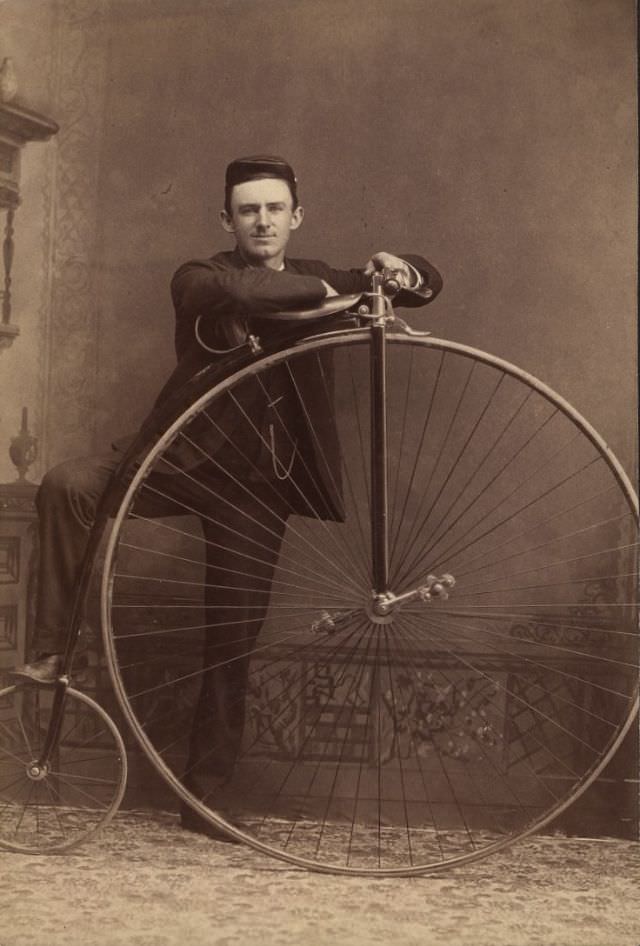
Poised in a studio setting, a sharply dressed rider leans with quiet confidence against a penny-farthing, its towering front wheel dominating the frame while the tiny rear wheel tucks behind like an afterthought. The sepia tones and painted backdrop turn the scene into a deliberate portrait of modernity, where clothing, posture, and machine all work together to signal status and daring. Even without a captioned place or date, the photograph speaks the universal language of early cycling: balance, bravado, and the thrill of new technology.
The penny-farthing itself is the real invention on display—an elegant, unforgiving design built around a single massive wheel that translated each pedal stroke directly into speed. Spokes radiate like a clockface, the narrow tire traces a perfect arc, and the high saddle hints at the mount-and-dismount acrobatics riders had to master. Details such as the handlebar arrangement and the stark difference in wheel sizes underscore why these bicycles were both celebrated and feared, making vintage cycling photographs like this invaluable records of innovation in motion.
Collectors and history lovers are drawn to images like this because they preserve more than a machine; they preserve the moment cycling became a cultural statement. Before the “safety bicycle” normalized two wheels of equal size, the penny-farthing era invited photographers to frame riders as pioneers of speed and style, turning personal portraits into snapshots of industrial imagination. For anyone searching for antique bicycle history, penny-farthing photography, or the evolution of cycling inventions, this timeless scene offers an evocative doorway into the earliest days of the sport.