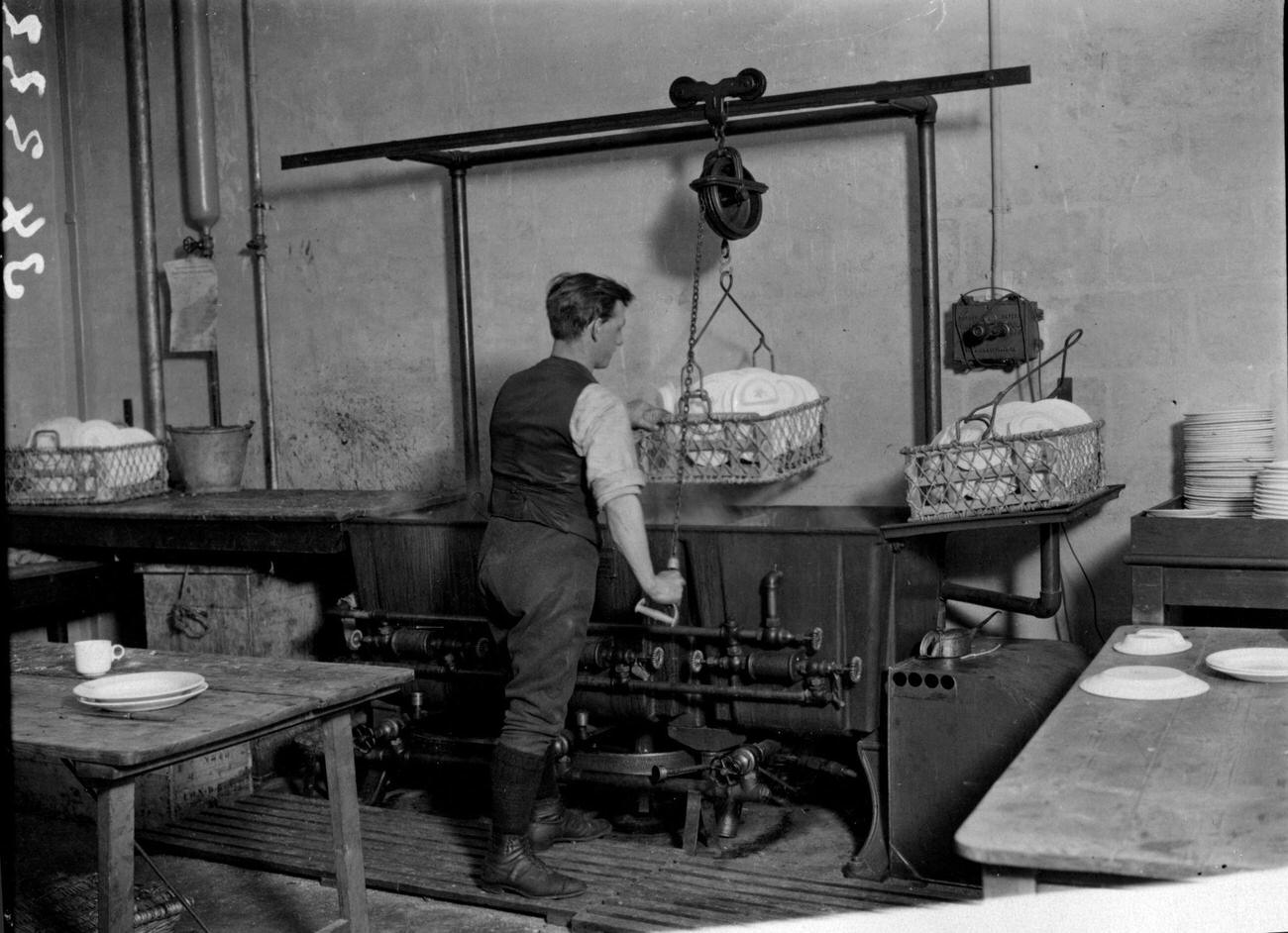
Against a bare utility wall and a tangle of pipes, a worker steadies a wire basket filled with stacked plates, guiding it beneath a pulley and rail system. The scene feels more like a small factory bay than a kitchen, with heavy plumbing, valves, and a compact control box suggesting a powered process rather than hand labor. On nearby tables, more dishes wait in neat piles, hinting at the constant churn of meals that made speed and repetition essential.
In 1922, “electrical” didn’t mean sleek countertop convenience; it often meant experimental hardware built to survive steam, water, and hard use. The gadget here appears to combine mechanical lifting with industrial-style washing equipment, turning fragile ceramics into a load that can be hoisted, moved, and handled in bulk. Baskets, chains, and fittings speak to an era when inventors borrowed ideas from workshops and laundries, then adapted them for the stubborn problem of dirty dishes.
For anyone tracing the history of dishwashing machines and early kitchen inventions, this photo offers a grounded look at the transition from manual scrubbing to mechanized cleaning. It also captures the workplace reality behind “modern” convenience: specialized equipment, careful handling, and systems designed to keep pace with demand. The result is a vivid snapshot of 1920s innovation—practical, improvised, and aimed squarely at saving time in the back rooms where hospitality and industry quietly met.