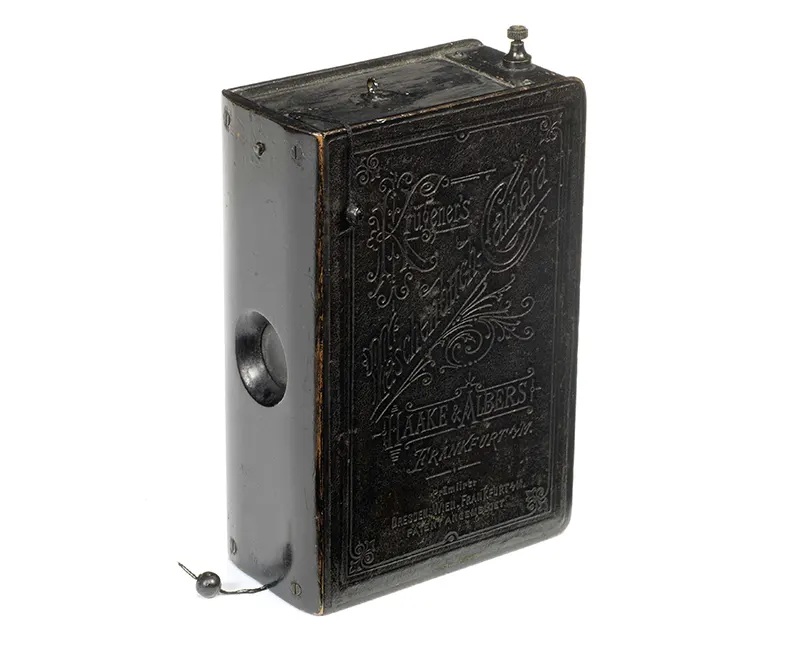
At first glance it could be mistaken for a small, well-worn volume, its dark cover pressed with ornate lettering and flourishes like a piece of late‑19th‑century bookbinding. Look closer and the disguise gives way: a round lens peeks from the side, a tiny fitting sits on top, and the edges show the practical seams of an object built for handling rather than reading. The result is a “book camera” in the most literal sense—photographic technology dressed in the familiar form of a pocket book.
Made in Germany in 1888, this inventive camera belongs to the era when photography was shrinking from studio equipment into something portable and personal. The compact case suggests discreet use, while the decorative front hints at how manufacturers sold modern devices with the visual language of luxury goods. For collectors and historians of early cameras, details like the embossed branding, metal hardware, and sturdy casing speak to both craftsmanship and the competitive market for new photographic inventions.
What makes this artifact so compelling is how clearly it embodies a turning point: images were no longer reserved for professionals with bulky gear, but increasingly accessible to everyday users willing to carry a clever box in a coat pocket. The photo invites a closer read of the surface—scratches, shine, and patina that quietly record decades of contact and curiosity. As a piece of photographic history, this 1888 German book camera sits at the crossroads of design, deception, and the growing appetite for capturing the world on demand.