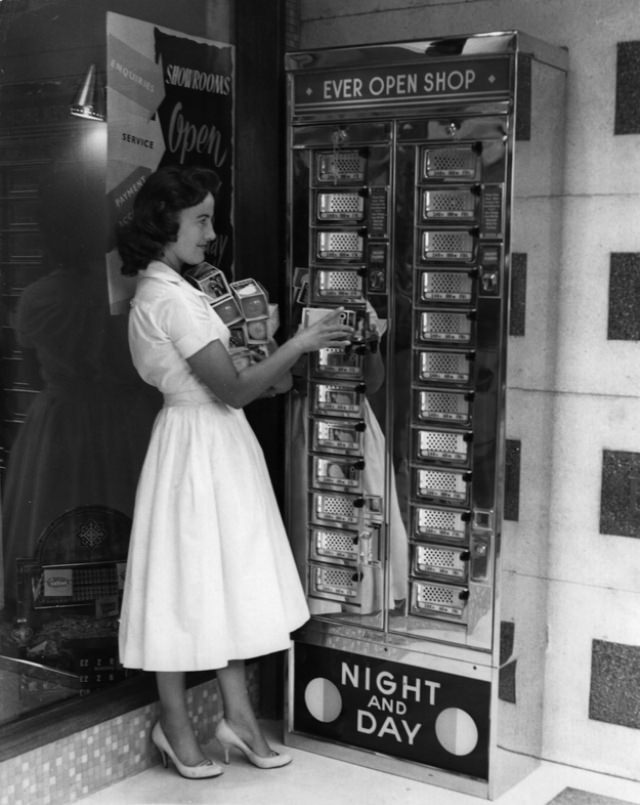
Outside a shopfront, a neatly dressed woman reaches toward a tall, glass-front vending cabinet labeled “EVER OPEN SHOP,” a promise of service that doesn’t sleep. The machine is packed with small boxed items arranged in tidy columns, each behind its own little door, turning lightbulbs into something you could buy as casually as a newspaper. In the corner of the scene, signage and window displays frame the moment like an invitation to modern convenience.
What makes the setup so striking is the way it treats household electricity as an everyday necessity—one that might fail at the most inconvenient hour. Rather than waiting for a store clerk, the customer can select a bulb on the spot, suggesting a world where “inventions” were increasingly judged by speed and accessibility. The bold “NIGHT AND DAY” lettering at the base reinforces the pitch: illumination is essential, and replacing it should be effortless.
For readers drawn to the history of vending machines, retail automation, and early consumer tech, this photo offers a compact lesson in how commerce adapted to new electrical habits. It also hints at the changing rhythms of city life, where late-night errands and round-the-clock services started to feel normal. A machine dispensing handy lightbulbs may seem quaint today, yet it signals a turning point in how people expected to shop—quickly, independently, and whenever the lights went out.