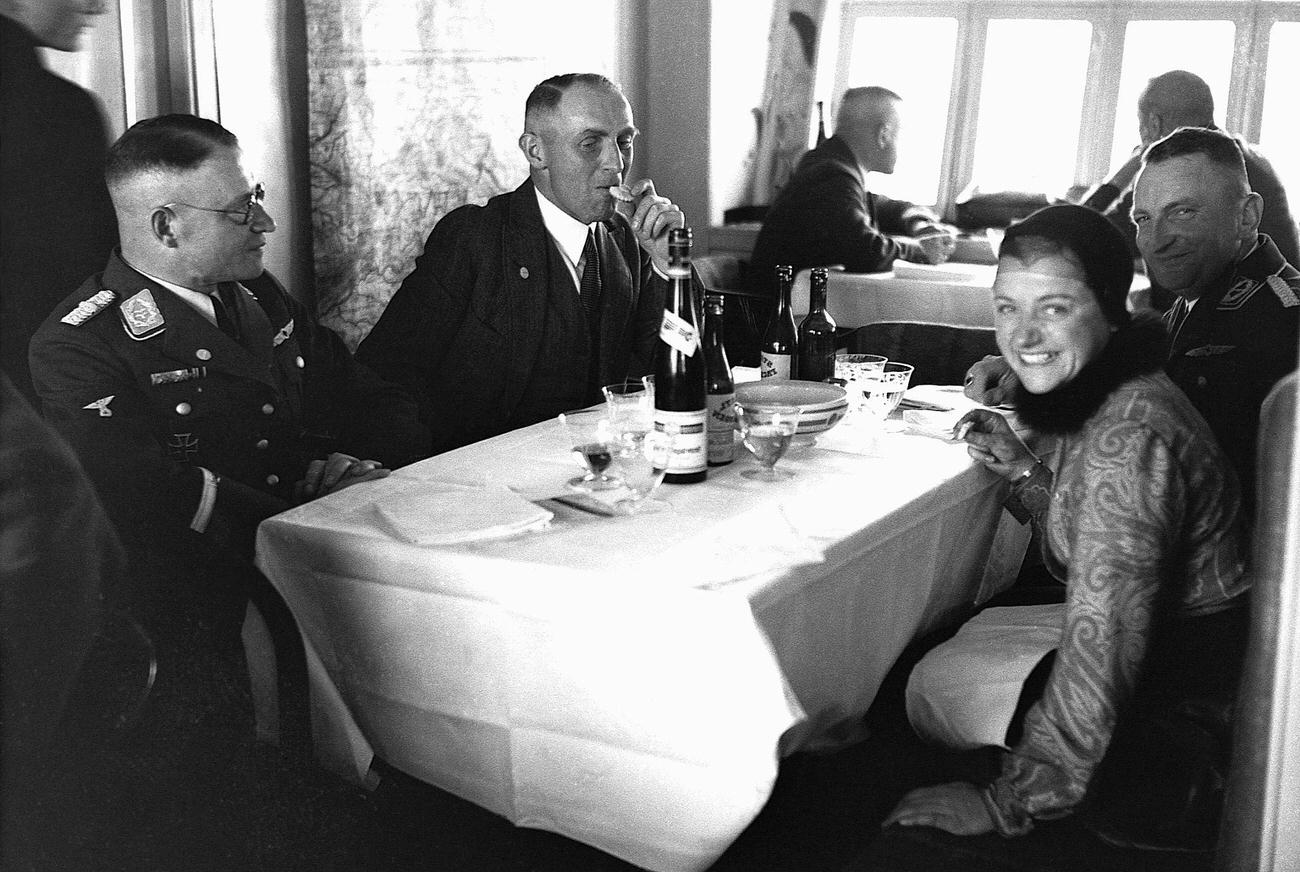
Long tables draped in crisp linen turn the Hindenburg’s dining room into something closer to a fashionable restaurant than the interior of a flying machine. Bottles and stemware cluster around place settings, while passengers lean in to talk, smoke, and smile, framed by bright windows that hint at the sky just beyond the walls. The scene is intimate and surprisingly ordinary—an airborne social hour made possible by extraordinary engineering.
Airship travel in 1936 was sold as modern luxury, and details like table service and a dedicated lounge area helped justify its prestige. The soft light, tailored clothing, and relaxed postures suggest a carefully managed atmosphere: comfort and calm were part of the experience, even as the craft moved through the air. It’s a candid glimpse into how technology and hospitality were woven together aboard one of the era’s most talked-about dirigibles.
For readers interested in inventions and design history, the photo underscores how the Hindenburg functioned as both transportation and spectacle. The dining room’s clean lines and hotel-like routine speak to a moment when the future seemed to arrive with white tablecloths, fine glassware, and conversation at cruising altitude. As a historical image, it invites a closer look at everyday life inside a 1930s airship—where innovation wasn’t just in the engines, but in the experience.