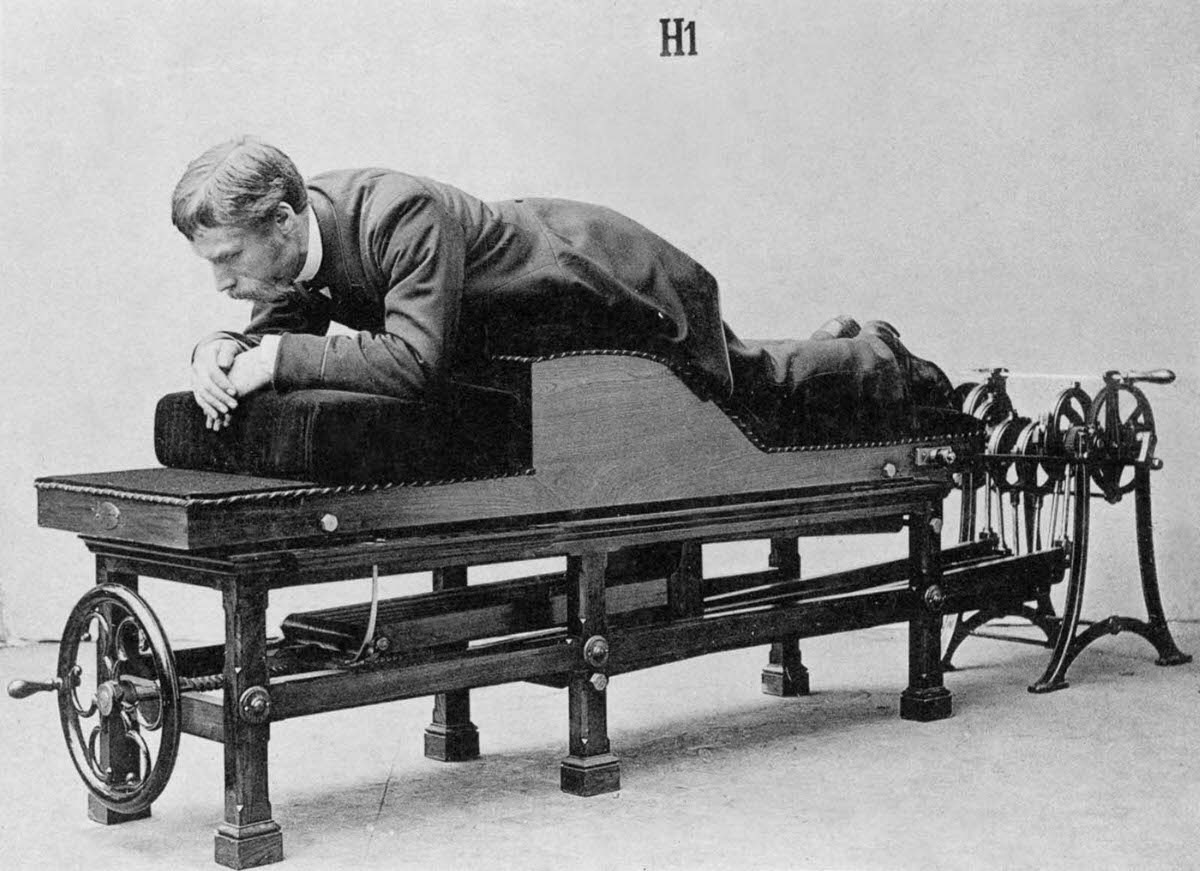
Curiosity takes a mechanical turn in this oddball wellness invention: a suited man lies face-down on a padded bench while a belt-and-wheel apparatus sits ready at the far end, all angles, gears, and polished wood. The pose is half clinical, half theatrical, as if the operator has stepped away just long enough for a promotional photograph. Even without a visible setting beyond the plain backdrop, the contraption’s purpose reads clearly—an engineered answer to the very human desire for relief.
“Come and get your stomach kneaded” sounds like a carnival bark or a spa slogan, yet it points to a serious historical fascination with mechanized massage and “body culture.” Devices like this promised to stimulate digestion, loosen tension, and restore vigor through rhythmic motion—no hands required, just cranks and linkages doing the work. The metalwork and adjustable fittings suggest it was meant to be repeatable and precise, a kind of early fitness-and-therapy machine marketed with the confidence of modern technology.
For readers interested in antique inventions, medical history, and the evolution of wellness trends, the photo is a reminder that today’s massage guns and vibrating belts have deep roots. It also hints at the era’s faith that the body could be tuned like a machine—kneaded, aligned, and improved through engineered movement. Strange as it looks now, the contraption sits squarely in the long story of how innovation has chased comfort, health, and a better stomach, one mechanism at a time.