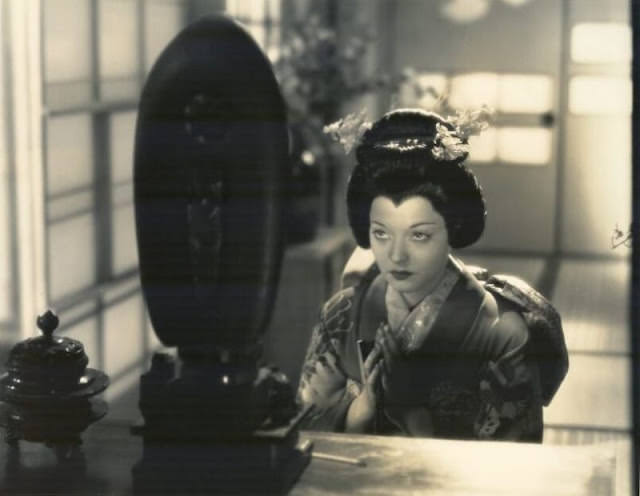
Soft light falls across a quiet interior as Sylvia Sidney sits in period costume, her gaze steady and intent. A large mirror dominates the foreground, turning the scene into a study of reflection and performance, while patterned fabric and carefully arranged hair ornaments hint at the film’s stylized world. The composition feels intimate, as if the viewer has been allowed a private moment between takes in a 1932 screen adaptation of “Madame Butterfly.”
Sidney’s expression carries the kind of restrained emotion early sound cinema prized—poised on the edge of vulnerability without slipping into melodrama. The set behind her, with its paneled screens and orderly lines, frames her face and hands, drawing attention to small gestures that read powerfully on camera. For fans searching “Sylvia Sidney Madame Butterfly 1932,” the photo offers a vivid reminder of how costume, lighting, and stillness could tell a story as effectively as dialogue.
Movie history enthusiasts will recognize the craftsmanship typical of the era’s studio productions: controlled shadows, crisp staging, and a theatrical sense of space adapted for the lens. As a collectible Hollywood still, it invites closer looking—at the textures, the props, and the way the mirror subtly doubles the drama. Whether you’re exploring classic Movies & TV or tracing Sidney’s filmography, this image captures the mood of an unforgettable performance without needing a single spoken line.