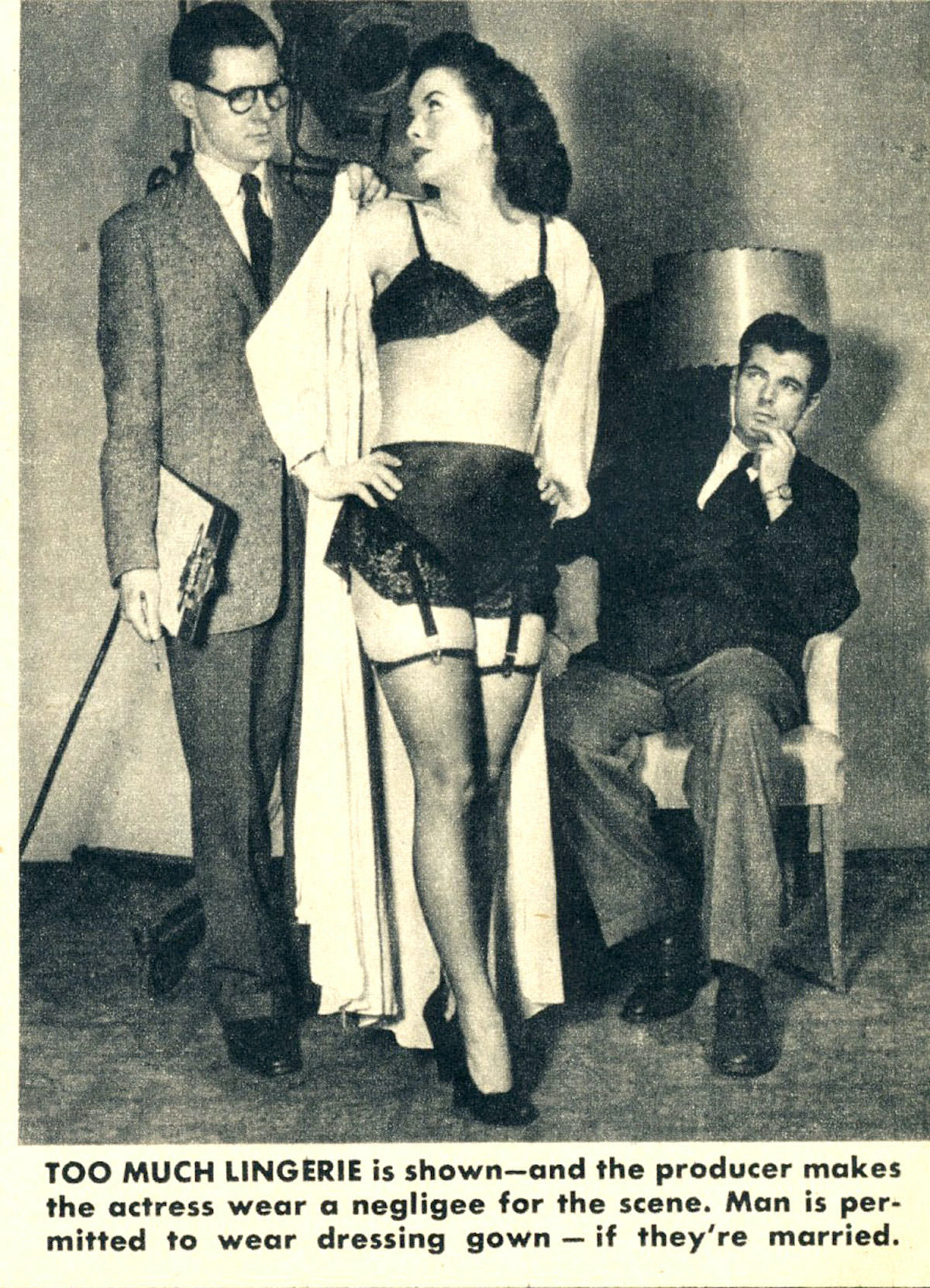
A staged studio moment unfolds like a lesson in old-screen “decency” rules: an actress stands confidently in lingerie while two suited men look on, one with papers in hand and another seated, appraising the scene. The contrast between her poised, almost theatrical stance and the men’s buttoned-up formality hints at the constant negotiation between glamour, propriety, and power on mid-century sets. Even without a visible film title, the setup reads as pure Movies & TV—performance, judgment, and the business of selling an image.
The caption at the bottom does much of the talking, invoking the era’s obsession with what could be “shown” and what had to be covered, down to the idea of swapping lingerie for a negligee and allowing a man a dressing gown under certain conditions. Those lines reflect the moral codes and censorship pressures that shaped costume design, camera angles, and even plot choices, especially when sexuality was implied rather than stated. In that sense, “Too Much lingerie” isn’t just a cheeky headline; it’s a window into how entertainment industries policed bodies while still courting attention.
Details like the robe slipping from the shoulders, the high-waisted silhouette, and the composed expressions turn this into a small drama about control and presentation—who decides what’s “too much,” and why. For readers interested in classic Hollywood style, vintage pin-up aesthetics, or the history of film and television standards, the photo offers a crisp snapshot of the tensions behind the scenes. It’s as much about the rules of looking as it is about the look itself.